

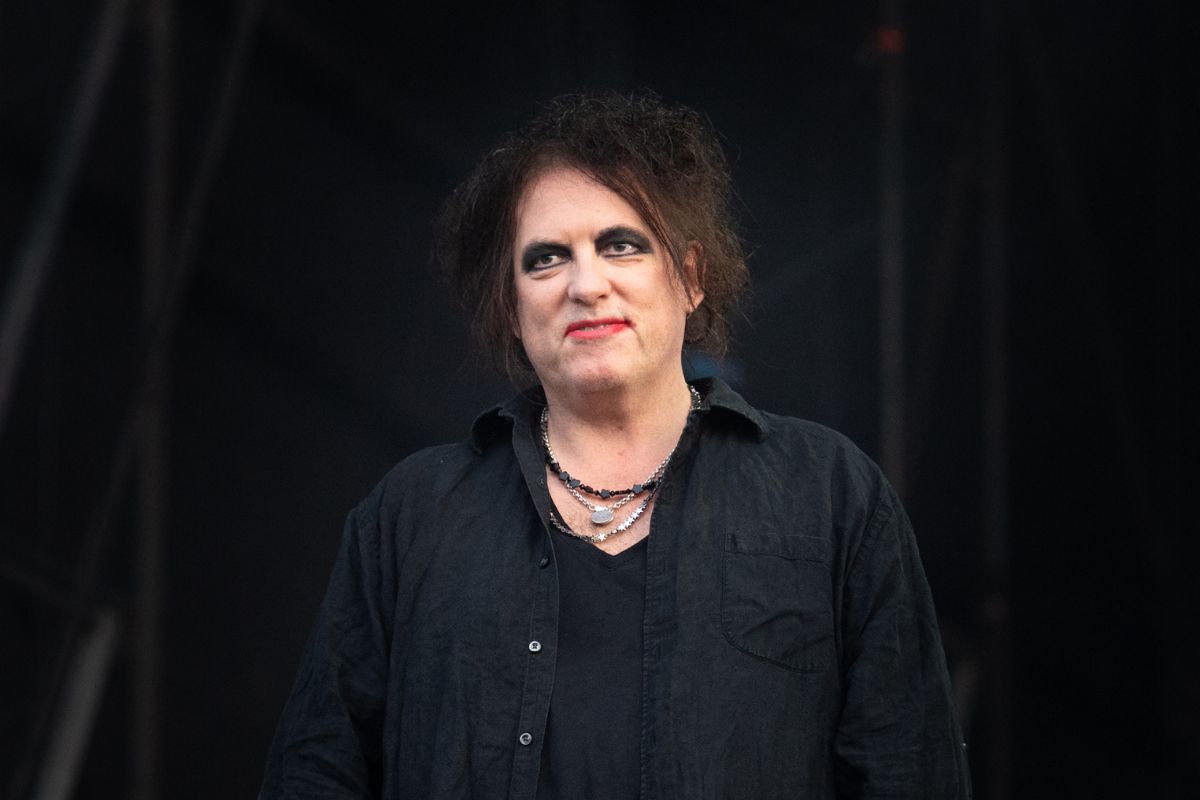
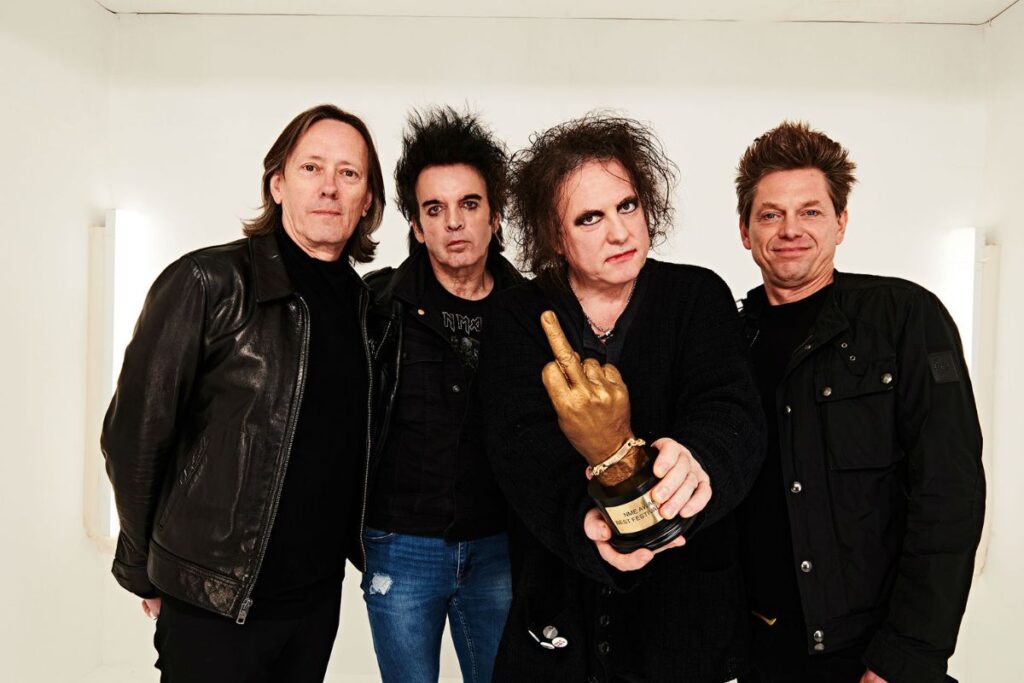
Rock and Roll Hall of Fame, 2024. Robert Smith walks onstage. Wild black hair. Smudged crimson lips. Oversized black clothing that looks both accidental and completely intentional. Four decades in, and the man still stops a room.
That’s the thing about Robert Smith’s look. It was never a costume. It was a statement. And it landed so hard in the early 1980s that it shaped an entire subculture, an entire way of getting dressed, an entire way of existing in the world. The Cure didn’t just make gothic rock. They gave it a face.

Picture this: Rock & Roll Hall of Fame, 2024. Among polished pop stars stands Robert Smith. Wild black hair reaches skyward. Crimson lipstick smudges across his face. Oversized black clothing drapes his frame. Four decades haven’t dimmed his impact. The Robert Smith goth fashion phenomenon still captivates millions. His disheveled elegance birthed an entire aesthetic movement. From underground clubs to haute couture runways, The Cure goth fashion transformed how we express darkness beautifully.
The Birth of an Icon: Robert Smith’s Signature Look in the 1980s
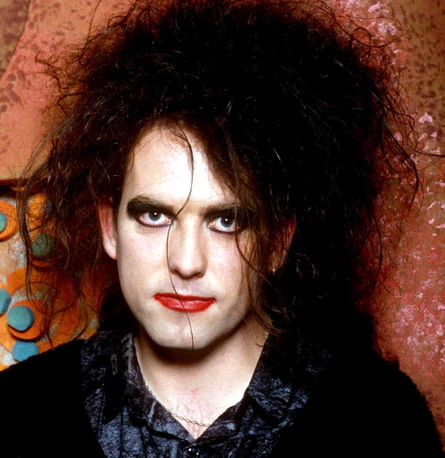
Robert Smith in 1978 looked like a different person. Short hair. Simple clothes. Standard post-punk simplicity. Nothing suggested what was coming. Then came Pornography in 1982. Something cracked open. The sound got darker, more claustrophobic, more theatrical.
Smith followed it there visually. Backcombed hair. Heavy eyeliner. Oversized black sweaters that swallowed him whole. The look wasn’t styled. It looked like he’d crawled out of his own lyrics and forgotten to check a mirror. That’s exactly why it worked.
Three things defined The Cure’s goth fashion identity. First: hair teased and backcombed into something between a storm cloud and a bird’s nest. Second: makeup that looked smudged and exhausted and somehow perfect. Third: layered black clothing, mostly thrifted, that prioritized weight and texture over fit. Unlike glam rock’s precision or New Romantic frills, Smith’s look was a beautiful disaster. It screamed real emotion over manufactured image.
From Post-Punk to Gothic Pioneer
The early Cure played stripped-down minimalism. The music dictated the look. But financial pressure sent Smith to thrift stores, and what started as budget necessity became aesthetic identity.
London’s Batcave nightclub was the petri dish for all of this. Bauhaus and Siouxsie Sioux were in the mix. Smith absorbed those influences and built something more accessible. His version required no professional help. You needed hairspray and eyeliner. That was the whole barrier to entry. Anyone could show up.
The Iconic Trifecta: Hair, Eyes, and Wardrobe
The hair defied gravity. Smith backcombed for hours, built volume layer by layer, and finished with whatever Aqua Net could hold it. It looked chaotic. It was deliberate. The androgyny of it directly challenged 1980s masculine grooming norms.
His eyes told a story. Heavy kohl extended past the outer corners, then smudged into something between exhaustion and intent. Red lipstick applied messily and half-wiped off. Pale foundation. The whole face read as vulnerable, raw, honest. In image-obsessed 80s culture, that was genuinely countercultural.
The clothes followed the same logic. Oversized black cardigans and sweaters worn like armor. Distressed textures. Black on black. Nothing polished, nothing new-looking. The silhouette was protective and romantic at the same time.
Deconstructing The Look: Hair, Makeup, and Clothing Elements
Smith’s genius was accessibility. You didn’t need a stylist. You didn’t need money. Teenagers in American suburbs could watch an NME photo spread and replicate what they saw using drugstore products and thrift store finds. That democratic quality is what made this a movement rather than a celebrity aesthetic.
The Hair
Start with dry, unwashed hair. The texture helps. Section the hair and backcomb from ends toward roots, building volume gradually. Layer by layer. Once you’ve built the mass you want, hit it with firm-hold spray. The goal is controlled chaos. It should look like you’ve been through something.
The Makeup
Foundation runs one shade lighter than your natural skin tone. Set with translucent powder. Line eyes with black kohl, extend past the outer corners, then smudge with fingertips or a smudge brush. Apply crimson lipstick directly from the tube without careful outlining. Blot once, reapply, and smudge the edges deliberately. The point is beautiful imprecision. Practice makes it look more effortless, which is the whole joke.
The Wardrobe
Black sweaters. Oversized. Worn until they soften and stretch. Layered with other black pieces so the tones and textures play against each other. Distressed fabric over pristine fabric every time. Thrift stores still deliver the best finds for this look, and that’s not a budget tip; it’s the authentic approach.
The Cure’s Influence on 1980s Goth Fashion Movement
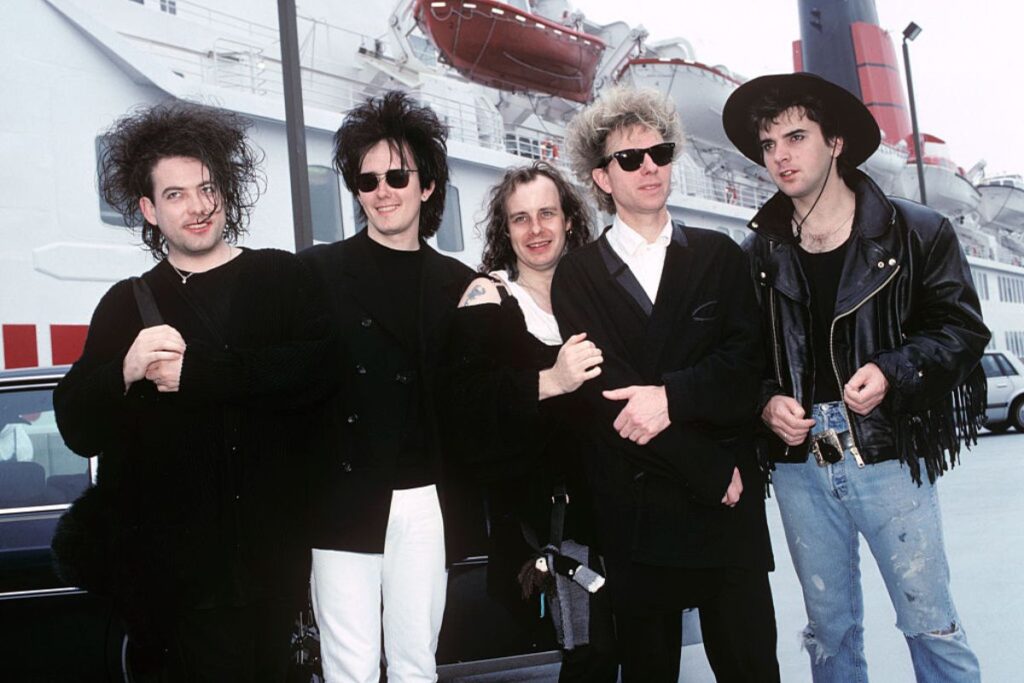
Fans didn’t just listen to The Cure. They dressed like them. The look spread through club culture in New York, Los Angeles, and Chicago. NME and Melody Maker legitimized it. MTV broadcast it into American living rooms. Regional variations emerged everywhere, but the source was clear.
Peter Murphy and Andrew Eldritch were in the same orbit. But Smith’s look was softer in a way that made it more broadly wearable. The darkness was there, but so was vulnerability. That combination gave emotional outsiders a visual identity they could actually adopt.
The androgyny mattered too. Smith wearing makeup and oversized clothes in 1982 created space for gender expression that mainstream culture wouldn’t catch up to for decades. His look said you didn’t have to perform conventional masculinity or femininity to belong somewhere.
From Underground to Mainstream: Robert Smith’s Fashion Legacy Today

Hedi Slimane and Rick Owens cite The Cure’s influence openly. Their runway work shows it. The silhouettes, the color palette, the rejection of conventional masculine tailoring, all of it traces back to what Smith was doing in 1982 in a thrift store sweater.
The 2024 Rock Hall induction brought a fresh wave of attention. TikTok tutorials on Smith’s makeup accumulate millions of views. Billie Eilish draws from the same well. Gen Z found this aesthetic and claimed it without needing a history lesson first. That’s how you know a style actually works.
Gothic fashion doesn’t fade. It goes quiet, then comes back harder. The 80s revival cycle we’re in right now keeps returning to Smith specifically because his look has no expiration date. It was never trend-dependent. It was emotionally grounded.
Why Robert Smith’s Style Resonates
Why Robert Smith’s Style Resonates
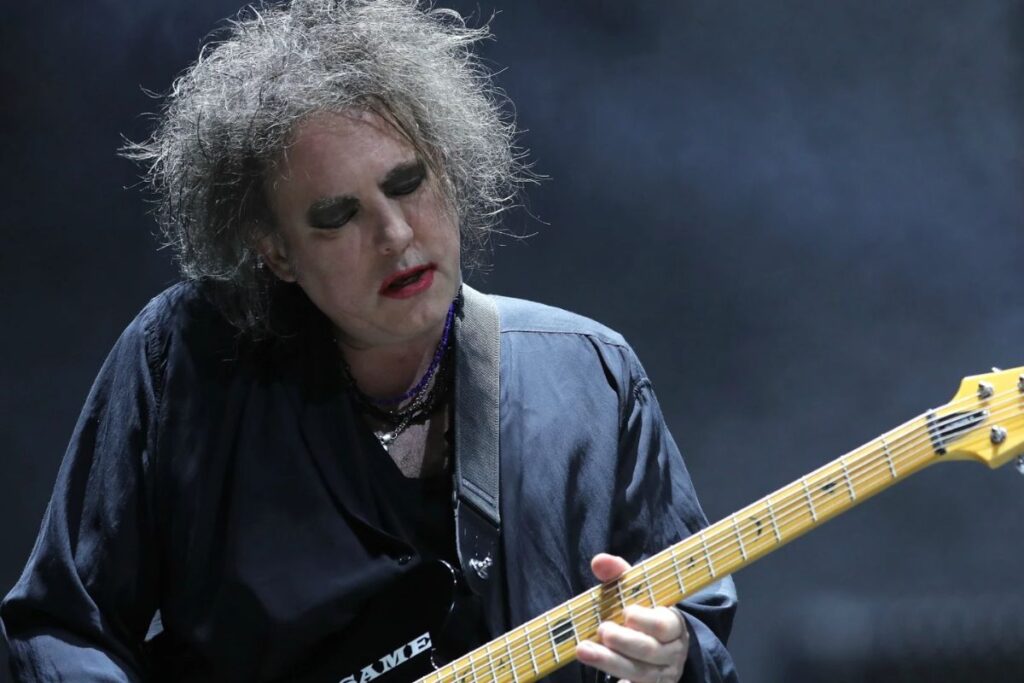
The look rejected manufactured perfection at a moment when pop culture was obsessed with it. That rejection felt honest. It still does.
Melancholy, alienation, and romantic longing don’t have a generation. They’re not 80s feelings. They’re human feelings. Smith’s aesthetic gave those feelings a visual form that anyone could recognize and adopt. The DIY accessibility meant it never became elite or gatekept. You showed up with what you had.
That’s why every few years another generation rediscovers this look and feels like they found something true.
How to Channel Robert Smith’s Style in Modern Fashion
The core philosophy is simple: embrace beautiful imperfection. Everything else follows from that.
Modern Interpretation Tips
- Start with monochrome black. Build the wardrobe foundation there.
- Mix thrift finds with contemporary basics. Quality matters, but pristine doesn’t.
- Killstar, Dolls Kill, and even H&M carry accessible pieces. Thrift stores remain the most authentic source for distressed textures.
- Balance dramatic elements with restrained ones. A statement sweater works better against simple trousers than competing pieces.
- Save the full commitment for concerts and events. Workplace-appropriate versions substitute structured black pieces for the oversized knits.
Makeup Basics
Primer first. Full-coverage foundation one shade lighter than your natural tone. Set with translucent powder. Black kohl liner extended past the outer corners and smudged. Crimson lipstick applied and deliberately imprecise. The smudged liner improves with confidence. Don’t aim for clean lines.
Styling for Different Occasions
- Everyday: layered black pieces in quality fabrics. Subtle makeup, backcombed hair at moderate volume.
- Professional: structured black silhouettes with a single statement piece. Skip the smudged makeup.
- Concerts and festivals: the full look. This is what it was built for.
The Eternal Influence of Robert Smith Goth Fashion
Four decades. That’s how long this look has stayed relevant. Not by being timeless in some vague decorative sense, but by being emotionally honest. Smith built an aesthetic around real feelings, accessible tools, and zero concern for mainstream approval. That combination doesn’t age.
Academic fashion programs study how The Cure defined goth style. Designers cite him on runways. Teenagers on TikTok recreate his makeup without knowing exactly why it pulls at them. The reason is the same across all of it. The look tells the truth about how some people feel, and it does it without apology.
That’s the whole legacy. Backcombed hair, smudged lipstick, a thrift store sweater, and the radical act of looking exactly like yourself.
FAQ’s: Robert Smith Goth Fashion Questions Answered
Why is Robert Smith considered a goth fashion icon?
He made dark fashion accessible. No professional stylist needed, no expensive products required. His look expressed genuine emotional vulnerability at a moment when that was genuinely countercultural, and it gave millions of outsiders a visual identity they could actually replicate.
How did The Cure influence goth fashion?
He made dark fashion accessible. No professional stylist needed, no expensive products required. His look expressed genuine emotional vulnerability at a moment when that was genuinely countercultural, and it gave millions of outsiders a visual identity they could actually replicate.
What defines traditional goth style?
Monochrome black clothing, dramatic makeup, teased hair, pale skin, distressed textures, and layered silhouettes. Victorian and Edwardian references often mix with punk elements. The through line is emotional expression over fashion conformity.
Why does 80s goth fashion keep trending?
Because the feelings behind it are permanent. Melancholy, alienation, and dark romanticism don’t belong to any decade. Social media amplifies each revival. Younger audiences find the aesthetic and recognize something true in it, the same thing older goths recognized in 1982.
Is Robert Smith’s look still relevant in modern goth fashion?
Yes. Contemporary designers reference it directly. TikTok tutorials on his makeup reach millions monthly. The look adapts to new contexts without losing its core. It was never trend-dependent, which is why it keeps coming back.
If you’re interested in Jenna Ortega’s Goth, be sure to check out our How Jenna Ortega Redefined Goth Fashion to explore more unique and dark options!