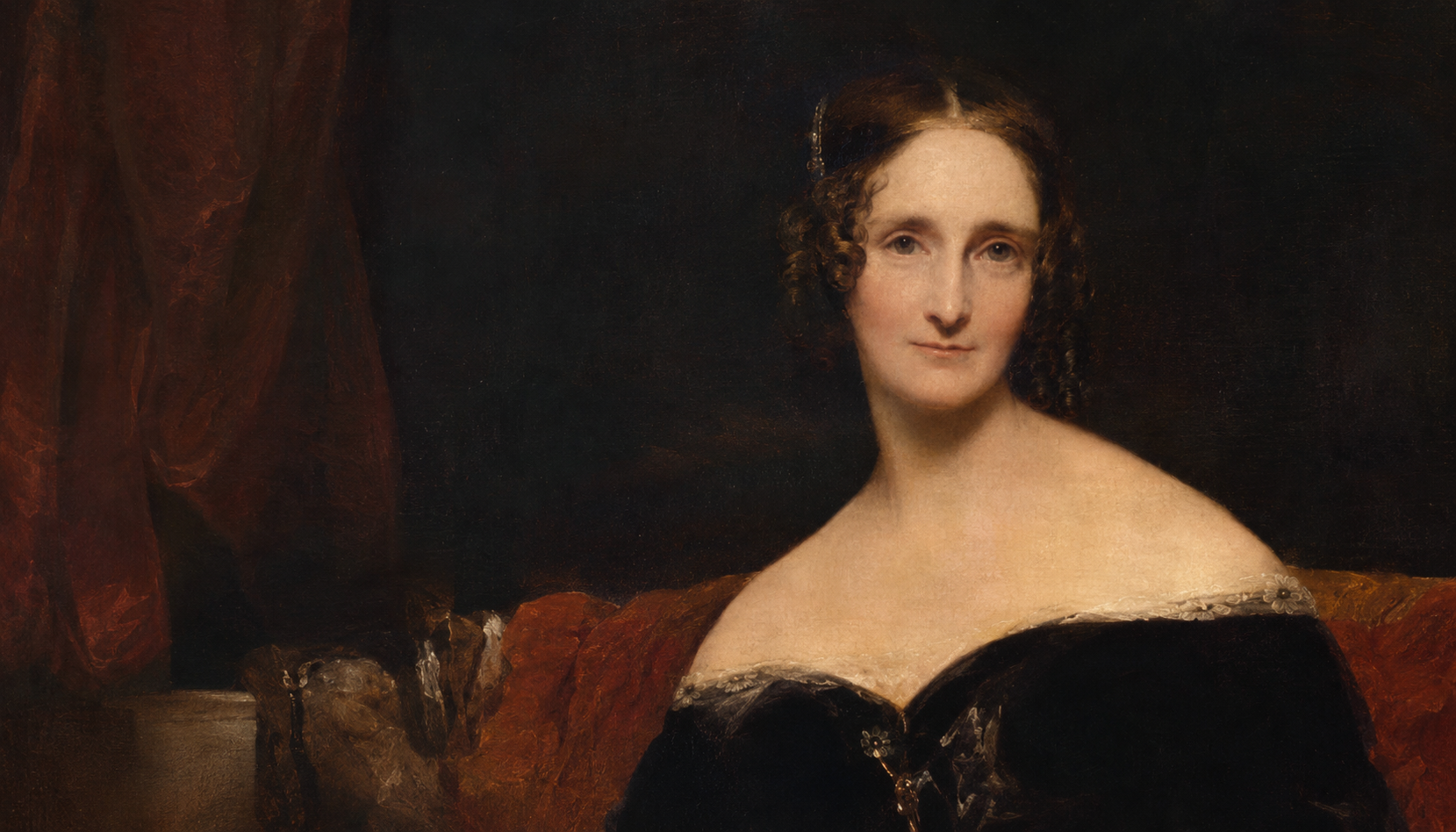
Mary Shelley wrote Frankenstein before she turned twenty, starting the novel at eighteen during a rain-soaked summer in Switzerland. She wasn’t alone.
Lord Byron, her lover Percy Shelley, and Byron’s physician John Polidori shared the same rain-soaked house, each trying to write the scariest ghost story they could manage.
Only one of them changed literature forever. It turned a teenager’s nightmare into the blueprint gothic horror still follows two hundred years later.
The Rainy Summer That Started It All
In June 1816, Lord Byron rented Villa Diodati, a mansion on the shore of Lake Geneva, and invited his circle to join him.
Percy Bysshe Shelley came along with his eighteen-year-old lover, Mary Godwin. She wouldn’t become Mary Shelley until December, when the two finally married.
Mary’s stepsister Claire Clairmont came too, mostly to stay close to Byron, whose child she was carrying.
The weather had other plans for the group. Mount Tambora, a volcano in Indonesia, had erupted the year before and thrown enough ash into the atmosphere to block sunlight across the globe.
People later called 1816 the Year Without a Summer. Switzerland got constant rain, freezing temperatures, and skies that stayed gray at noon. The group at Villa Diodati stayed indoors for days on end, restless and bored.
Lord Byron’s Ghost Story Challenge
Trapped inside, the group read aloud from Fantasmagoriana, a French collection of German ghost stories. The tales unsettled everyone enough that Byron proposed a contest. Each person would write their own.
Byron sketched a vampire story and abandoned it unfinished. His physician, John Polidori, picked up the fragment and built it into The Vampyre, the tale that invented the seductive, aristocratic vampire and set the template Bram Stoker’s Dracula later followed, and modern writers like Anne Rice after that.
Percy Shelley started something too, though nothing of his survived. Mary Godwin had nothing. For days, she couldn’t think of a single idea, and the others kept asking if she’d thought of her story yet.
An Eighteen-Year-Old Among Literary Giants
Mary wasn’t an unknown teenager along for the ride. Her mother, Mary Wollstonecraft, wrote one of the founding texts of modern feminism and died eleven days after giving birth to her.
Her father, William Godwin, was a well-known philosopher and novelist who raised Mary around radical conversations about power, creation, and rebellion.
She grew up reading her mother’s books instead of knowing her mother. That’s the part of Mary Shelley’s history most literature classes skip straight past.
Grief followed her into adulthood. She had already lost a premature daughter the year before, in 1815, and wrote in her journal about dreaming the baby had come back to life.
Death and rebirth weren’t abstract themes for Mary Godwin. They were personal, and they were recent.
The Nightmare That Became a Novel
Days after Byron’s challenge, Mary still had nothing. Then came the nightmare.
She saw a scientist hovering over an assembled body, watching it stir into life, then recoiling in horror at what he’d made.
The image hit her with enough force that she knew, almost instantly, what her ghost story would be. She started writing the next morning.
What began as a short piece grew into a full novel over the following months. Percy encouraged her, and by most accounts offered a few editorial suggestions along the way.
The ideas, the structure, and the voice belonged to Mary. That nightmare, more than anything else, is the real origin of Mary Shelley’s Frankenstein.
What Made Frankenstein Gothic Literature Before Gothic Existed
The word gothic already existed in 1816. It usually meant crumbling castles, forced marriages, and ghosts wandering the halls, the tradition Ann Radcliffe and Horace Walpole had built decades earlier.
Mary Shelley kept the mood and swapped the supernatural machinery for something worse: human ambition.
No demon curses Victor Frankenstein. No family ghost haunts him. He builds his own horror with his own hands, then abandons it out of guilt and disgust.
The real terror in the novel isn’t the creature’s face. It’s what happens when a creator rejects what he’s made, and what that rejection turns the creation into.
Mary set her story against the Alps instead of a haunted abbey, using the scale of the mountains to make her characters look small and reckless by comparison.
Nature towers over ambition in nearly every chapter. That shift, from inherited curses to self-made monsters, is why critics still credit Mary Shelley’s Frankenstein as gothic literature’s first real turn toward science fiction.
One detail trips up almost everyone: Frankenstein is the scientist’s name, not the monster’s. Shelley never named her creature at all, which is part of what makes him so unsettling.
Rejection defines him entirely, and he has no identity of his own.
If literary namesakes like his interest you, our gothic names guide covers plenty of other characters who ended up on real baby name lists, Victor included.
Why Mary Shelley’s Frankenstein Still Haunts Us
Two centuries before “playing God” became a headline cliché, Frankenstein was already asking how far science should go, who counts as a monster, and whether creation comes with responsibility.
That’s part of why the book refuses to age out of relevance. Every generation finds a new fear to hang on Victor Frankenstein’s obsession, from atomic power to AI.
The dark, doomed romanticism running through the novel spread well beyond one book, too.
It fed directly into the tradition of dark romance that still fills shelves today, the kind our dark romance books list covers in full.
Two Very Different Monsters, One Very Busy Year
2026 gave Frankenstein two new interpretations. Guillermo del Toro’s version, starring Oscar Isaac and Jacob Elordi, treated the novel with reverence and stuck close to Mary’s original tragedy.
Maggie Gyllenhaal took the opposite approach with The Bride!, a 1930s Chicago retelling starring Jessie Buckley and Christian Bale that expanded the minor “bride” character from the 1935 film into a story of her own.
Critics split hard on it, and it struggled at the box office after its March release. Both films still prove the same point: two hundred years later, filmmakers can’t leave Mary Shelley’s monster alone.
Mary Shelley wrote Frankenstein at an age when most people are still figuring out what they want to do with their lives.
She remains the reason gothic horror still works this way, and two centuries after Villa Diodati, calling her the mother of gothic horror isn’t an exaggeration. It’s just accurate.