Prince Albert died at Windsor Castle on December 14, 1861. He was forty-two.
Queen Victoria wore black for the next forty years, and in doing so, she turned private grief into a fashion system the whole British Empire followed.
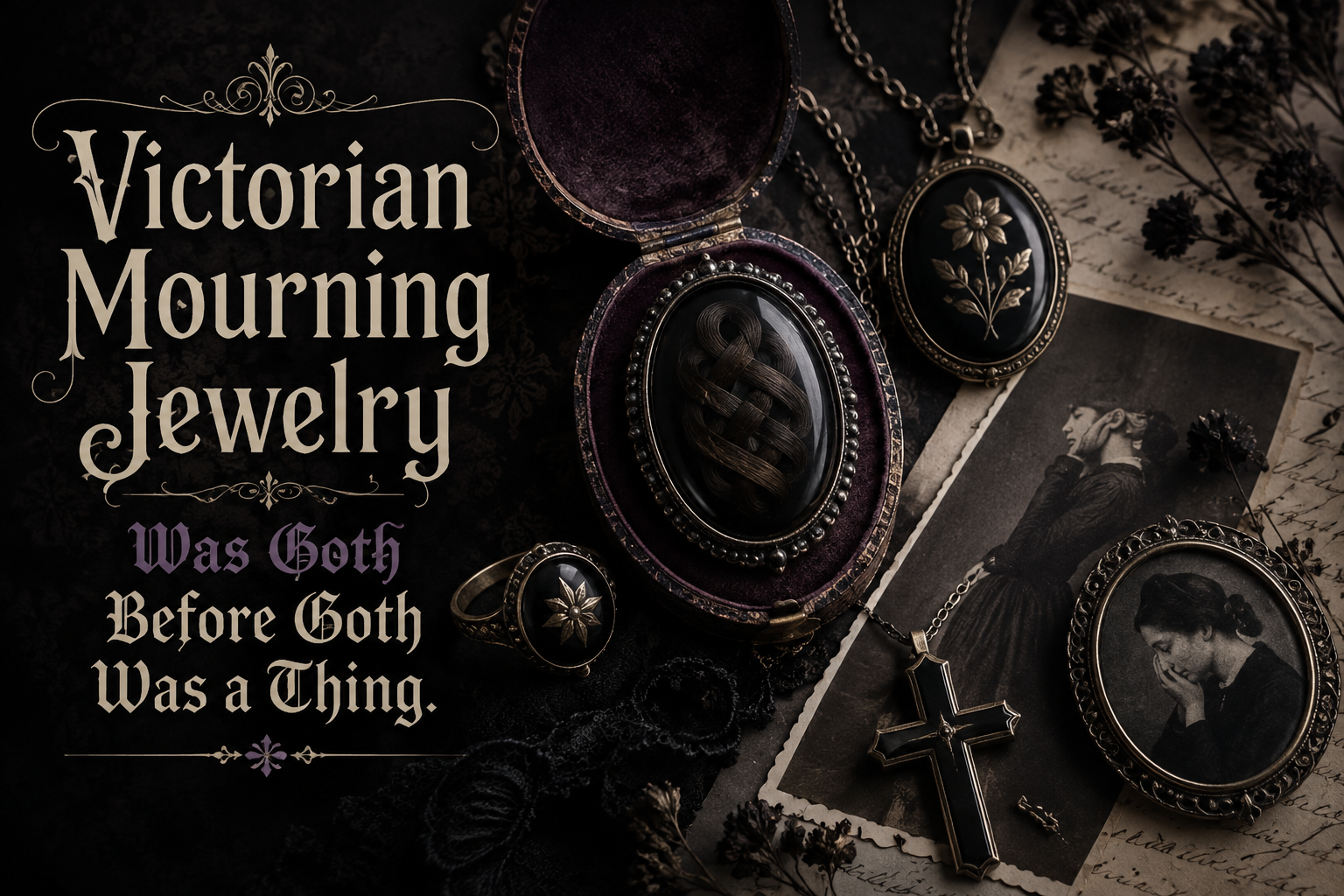
Black crepe gowns, heavy veils, and jet jewelry carved into skulls, urns, and weeping willows became the required uniform of loss.
That system produced Victorian mourning jewelry, and if you strip away the crinolines, what’s left looks a lot like the gothic wardrobe you already own.
The Death That Rewrote a Nation’s Wardrobe
Prince Albert had been sick with typhoid fever for weeks before he died at Windsor Castle.
Queen Victoria and five of their nine children were at his bedside. He was forty-two years old. He and Victoria had been married twenty-one years.
Victoria never recovered in any public sense. She kept the room where he died untouched for the rest of her life, with fresh flowers delivered daily and his last glass still sitting on the nightstand.
She wore black for the remaining four decades of her reign and never remarried. When she died in 1901, the mourning she started in 1861 had technically lasted forty years.
That kind of grief, performed at the top of the social order, did not stay private for long. Court dictated dress. Society copied court.
Dressmakers, drapers, and jewelers built entire businesses around supplying the public with what the Queen was already wearing.
Mourning stopped being a private emotional state and became a wardrobe requirement, with rules precise enough to need their own etiquette guides.
The Rules of Grief
Victorian mourning ran in stages, and each stage came with its own dress code. Widows had it hardest and longest.
Full Mourning
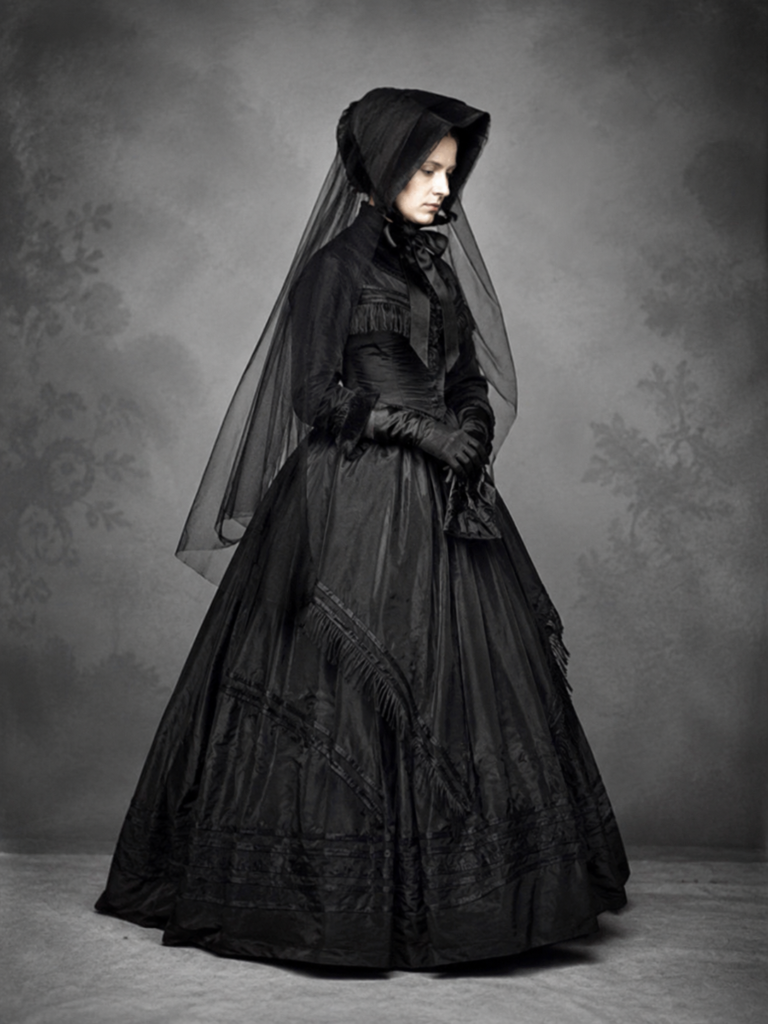
Demanded black from head to toe, dull crepe fabric with no shine, no jewelry beyond jet, and no ornament that caught the light.
Second Mourning
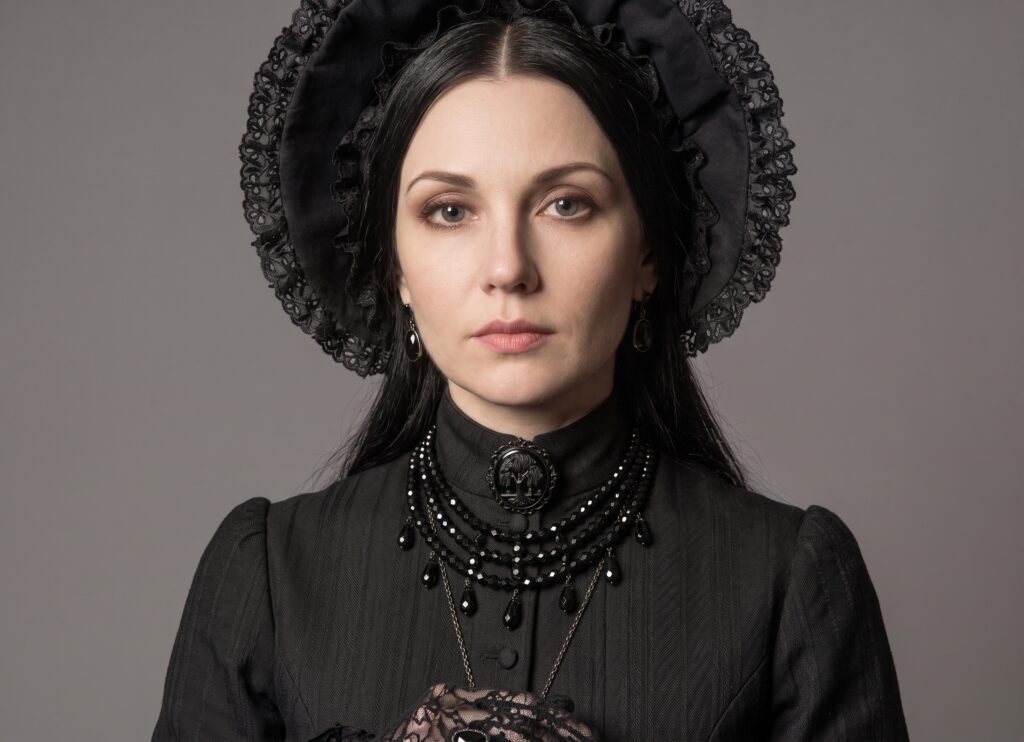
Ease the fabric restrictions slightly and allow small amounts of jet or black enameled jewelry.
Half Mourning
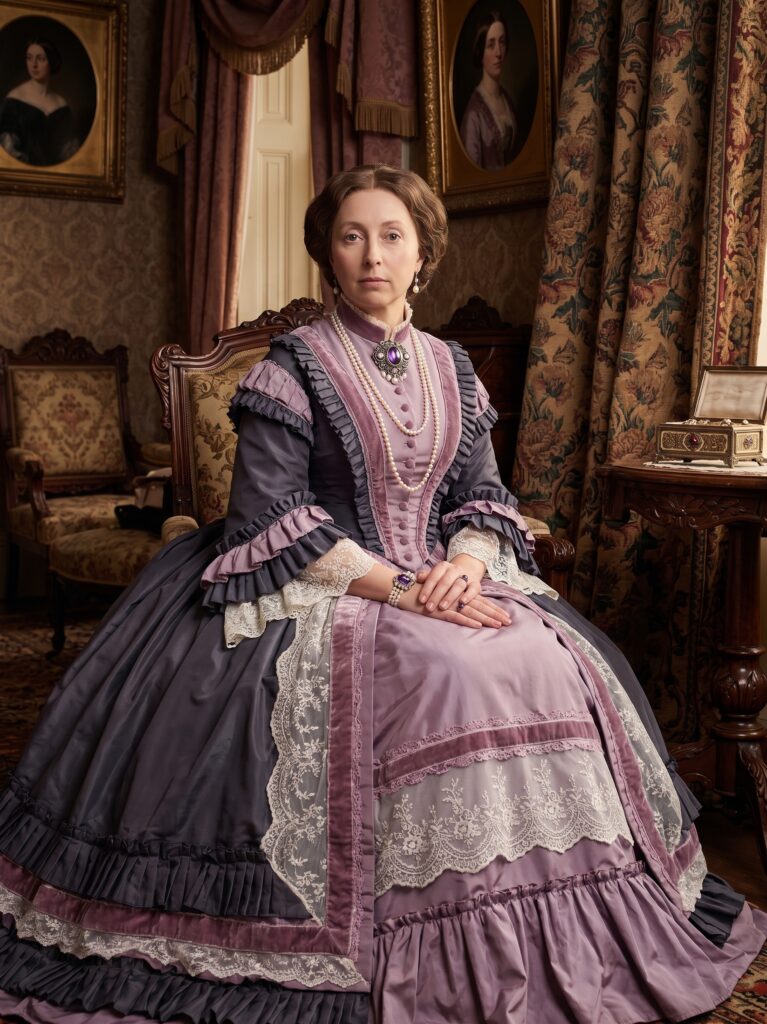
Could stretch on for another year or two, finally let grey, lavender, mauve, and white back into the wardrobe, along with jewelry set in amethyst or pearl.
| Stage | Typical Length | What Was Allowed |
| Full (Deep) Mourning | About a year, longest for widows | All black, dull crepe with no shine, jet jewelry only |
| Second Mourning | Several months to about a year | Black fabric eases slightly, small jet or black enamel jewelry, minimal trim |
| Half Mourning | Another one to two years | Grey, lavender, mauve, and white return, amethyst and pearl jewelry allowed |
Men’s mourning periods generally ran shorter than women’s under the same etiquette, though men still wore mourning jewelry in the form of rings, watch fobs, and cufflinks set in jet or black enamel.
Distant relatives and friends observed lighter versions of the same rules. Widows were expected to hold the line the longest of anyone, and Victoria herself never formally left half mourning again.
Beyond Jet: Cheaper Ways to Mourn in Style
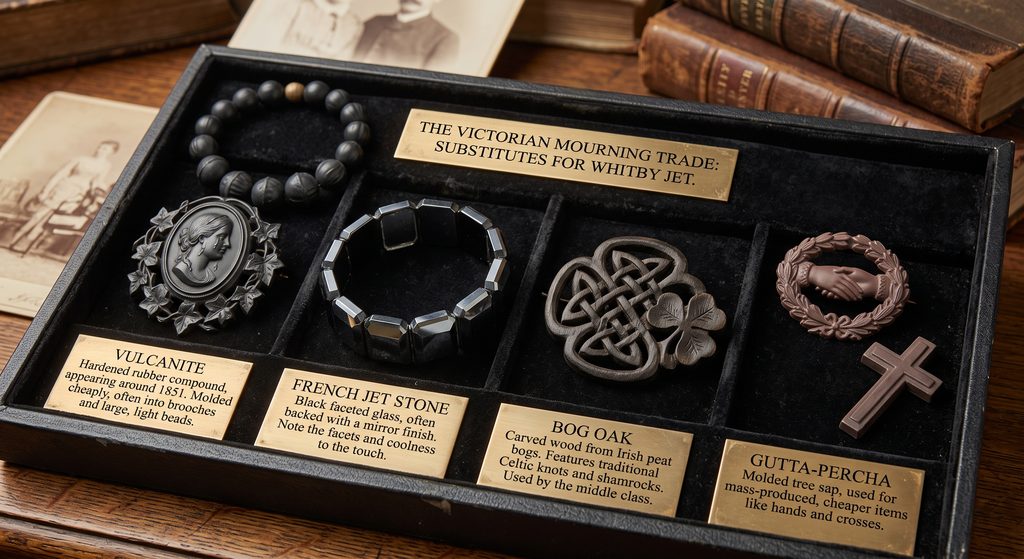
Real Whitby jet cost money, and not every mourner could afford it. The Victorian mourning trade built a whole hierarchy of substitutes to fill that gap.
Vulcanite, a hardened rubber compound that appeared around 1851, molded into brooches and beads far more cheaply than carved jet.
French jet stone was not jet at all. It was black glass, often faceted and backed with a mirror finish, and cooler to the touch than the real thing.
Bog oak, pulled from Irish peat bogs and carved into Celtic knots and shamrocks, gave middle-class mourners an option with genuine, if less prestigious, origins.
Gutta-percha, a molded tree sap, filled out the cheaper end of the market with mass-produced hands, crosses, and clasped-hand motifs.
None of these materials tried especially hard to pass for real jet once you knew what to look for.
A simple test still works on antique pieces today: jet and vulcanite feel warm against your skin, while French jet and onyx feel cold almost instantly.
The material a mourner could afford said as much about their place in society as the cut of their dress did.
Memento Mori and Mourning Jewelry Are Not the Same Thing
People use these two terms interchangeably, but they describe different traditions.
Memento mori, Latin for remember you must die, reminded the wearer of their own mortality in the abstract.
Skull rings, coffin pendants, and hourglass motifs date back to the 1400s.
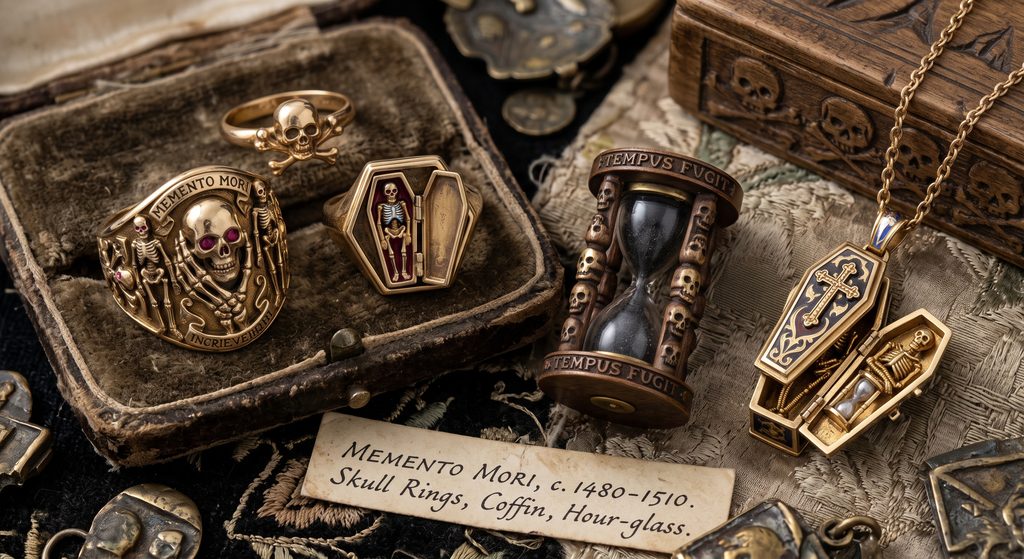
By the 1600s, jewelers were building elaborate mechanical pieces: a ring that flipped open to reveal a tiny skeleton, a flower that folded back into a skull. These pieces mourned death as a concept, not a specific person.
Mourning jewelry, by contrast, commemorated one particular loss.
Victorian mourning jewelry, such as a brooch, might carry a name, a date, and a lock of hair. The imagery softened too.
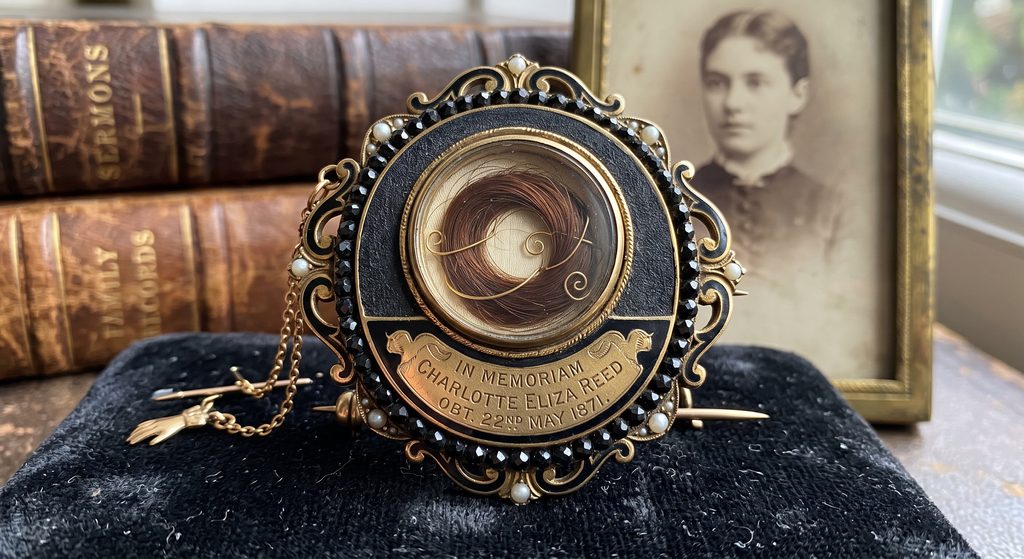
Skulls and crossbones gave way to weeping willows, funerary urns, cherubs, and clouds.
That shift reflected a change in Victorian religious feeling, away from a strict, judging God and toward a gentler picture of the afterlife.
The two traditions overlapped constantly, and Victorian jewelers borrowed old memento mori symbols freely, even while building pieces meant to honor one specific person rather than mortality in general.
Hair Jewelry: Grief You Could Wear Every Day
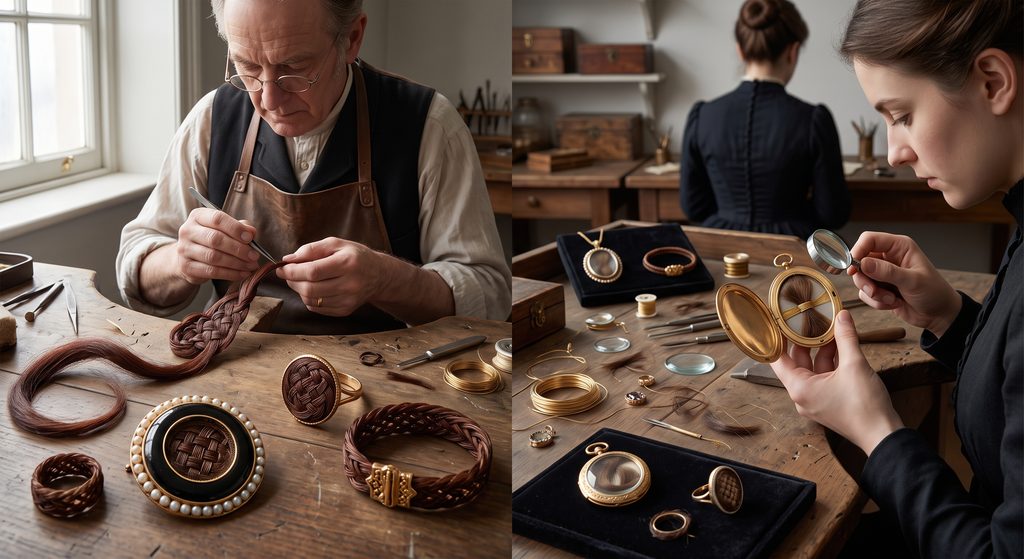
Hairwork was the most personal branch of Victorian mourning jewelry.
Jewelers wove a lock of the deceased’s hair into brooches, rings, and bracelets, or sealed it behind glass inside a locket.
The technique took real skill. Fine strands were braided or arranged into patterns, then set under crystal or framed in gold.
Hair jewelry was not only about death.
Victorians also exchanged hairwork pieces as tokens of love and friendship between the living, which is part of why museum curators today can struggle to tell a mourning piece from a sentimental one without an inscription.
Context and dates usually settle the question. A ring inscribed with a name and a date of death leaves little doubt about its purpose.
From Mourning Dress to Modern Goth
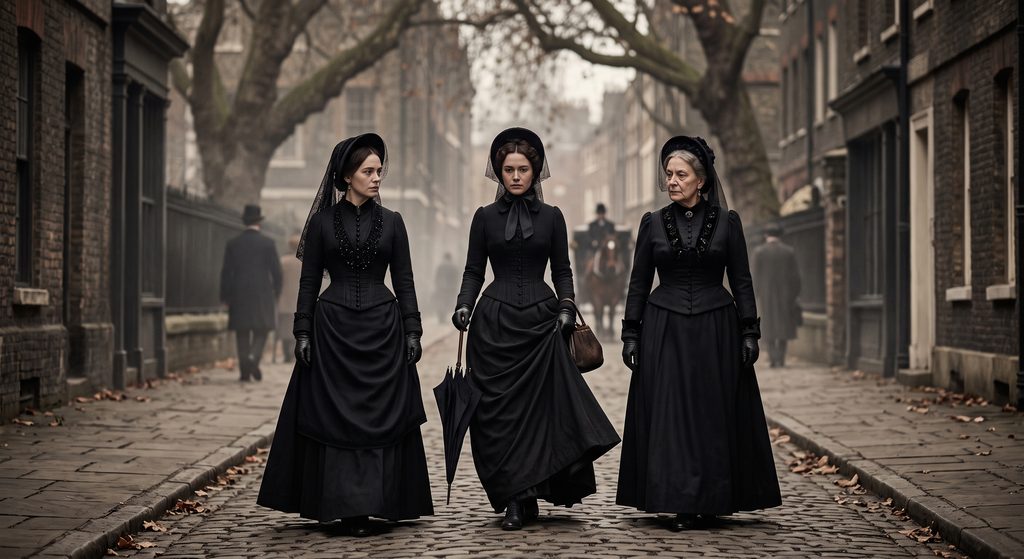
None of this happened because Victorians were trying to invent goth fashion.
But look at what the aesthetic actually consists of: black from head to toe, dramatic silhouettes, veils, and symbolic jewelry built around death and remembrance.
That is the visual language the gothic subculture picked up more than a century later, when post-punk kids in the late 1970s UK started dressing in black and calling it a movement.
The throughline shows up directly in fashion today.
Corseted bodices and full black skirts, the same silhouette Victorian mourners wore, anchor the Victorian goth dress category on the market right now.
It includes at least one design built specifically around the mourning gown look rather than general Gothic styling.
Skull motifs never left gothic jewelry either.
Modern gothic skull earrings carry the same memento mori impulse Victorian jewelers worked with, just rendered in stainless steel and sterling silver instead of jet.
And if jewelry only tells part of the story, our roundup of memento mori artworks traces the wider art tradition those symbols came from, long before anyone carved one into a brooch.
Frequently Asked Questions
What is Victorian mourning jewelry made of?
Jet was the material of choice, especially during full mourning, because of its deep black color and light weight. Half mourning allowed amethyst, pearl, and bog oak. Hair, woven or braided into the piece itself, showed up across every stage.
How long did Victorian mourning actually last?
Widows typically observed full mourning for about a year, followed by a lighter second mourning, then half mourning for another year or two. Exact timelines varied by etiquette guide and by the mourner’s relationship to the deceased. Queen Victoria herself never fully returned to ordinary dress after 1861.
Is memento mori jewelry the same as mourning jewelry?
No. Memento mori jewelry reminds the wearer of mortality in general, using symbols like skulls and hourglasses, and dates back to the 1400s. Mourning jewelry commemorates one specific person and became widespread in the Victorian era, often inscribed with a name, a date, or a lock of hair.
Why did Queen Victoria wear black for forty years?
Prince Albert, her husband of twenty-one years, died of typhoid fever in December 1861. Victoria never remarried and stayed in mourning dress, in one form or another, until her own death in 1901.
Can you still buy real Victorian mourning jewelry?
Yes. Antique dealers, estate sales, and platforms like Etsy carry genuine pieces, though condition, materials, and provenance vary a lot from listing to listing. Confirm whether a piece is genuine Whitby jet or one of the later imitations before paying antique prices for it.
What symbols show up most in Victorian mourning jewelry?
Urns, weeping willows, forget-me-nots, clasped hands, and cherubs dominate the Victorian pieces. Older memento mori jewelry leans harder on skulls, coffins, and hourglasses. Both traditions sometimes appear on the same piece.
Final Thought
Grief gave the Victorians a dress code, and that dress code gave modern goth fashion part of its blueprint. Long before anyone called it gothic, a queen in black jet jewelry was already wearing the look.
Affiliate Disclaimer
GothicMood.com is a participant in the Amazon Services LLC Associates Program, an affiliate advertising program designed to provide a means for sites to earn advertising fees by advertising and linking to Amazon.com and any other website that may be affiliated with the Amazon Services LLC Associates Program. As an Amazon Associate, we earn from qualifying purchases. This helps support the work we do, so we can keep creating content for you. It costs you nothing extra, but we’re legally required to disclose our participation in this program. This blog post contains affiliate links.