
Billie Eilish dark aesthetic has captivated millions worldwide, sparking endless debates about its true origins. Is she channeling goth fashion meaning from the 1980s underground scene? Does her style embody the raw rebellion of 90s grunge aesthetic? Or has this Gen Z fashion icon pioneered something entirely unprecedented in pop culture? Her haunting visuals, oversized clothing trend, and nightmarish music videos create a distinctive modern dark aesthetic that defies simple categorization. From neon green roots to horror-inspired imagery, Billie’s visual identity challenges conventional celebrity expectations. She’s transformed dark streetwear fashion into mainstream phenomenon while maintaining artistic integrity. Let’s decode the mystery behind her style evolution and cultural impact.
Billie Eilish dark aesthetic has become one of the most talked-about topics in contemporary fashion. You’ve probably scrolled past her haunting visuals on Instagram or watched her unsettling music videos. But what exactly defines this modern dark aesthetic? Is she channeling goth fashion meaning from the 80s? Does she embody the alternative subcultures of 90s grunge? Or has this Gen Z fashion icon created something entirely unprecedented? Let’s unravel the mystery behind Billie Eilish style and discover why millions of fans worldwide connect with her dark romantic aesthetic. Her influence extends far beyond music into youth driven fashion trends that reshape how we think about self expression and authenticity.
Understanding Billie Eilish’s Gothic Identity

Billie Eilish cultural impact reaches beyond catchy melodies and Grammy awards. She’s revolutionized how young artists present themselves in an era obsessed with perfection. Her Billie Eilish public image deliberately challenges conventional pop star expectations. While other celebrities showcase glamorous red carpet looks, Billie opts for oversized clothing trend pieces that hide her silhouette. This wasn’t accidental. It was strategic emotional fashion expression that sparked global conversations about body autonomy and female objectification in entertainment.
Billie Eilish personality shines through every fashion choice she makes. She transformed from a bedroom SoundCloud artist into a celebrity fashion influence powerhouse practically overnight. Her Billie Eilish career timeline shows remarkable consistency in visual storytelling. From Billie Eilish early fame around 2016 to her current status as a multi-platinum artist, she’s maintained artistic integrity. What makes her journey fascinating is how Billie Eilish fashion evolution mirrors her emotional growth. She didn’t follow trends. She created them through authentic Billie Eilish emotional honesty that resonates with Gen Z dark fashion sensibilities.
Why Billie’s Aesthetic Transcends Traditional Pop Fashion
Alternative celebrity fashion took a dramatic turn when Billie entered the scene. Compare her edgy fashion style with contemporaries like Ariana Grande’s sweet femininity or Taylor Swift’s polished elegance. Billie stands apart. Her anti-fashion style rejects Instagram-filtered perfection that dominates social media. She proved that Billie Eilish authenticity sells better than manufactured personas. TikTok fashion trends now regularly feature recreations of her looks. Teenagers worldwide adopted dark streetwear fashion because she made it acceptable, even desirable, to dress for comfort rather than male approval.
Defining Goth vs. Grunge: The Key Differences That Matter

Understanding goth fashion meaning requires looking back to post-punk Britain in the late 1970s. Bands like Bauhaus and Siouxsie and the Banshees pioneered gothic influence in fashion with dramatic makeup, Victorian-inspired clothing, and an obsession with romantic darkness. Modern goth style evolved from fishnet stockings, corsets, heavy eyeliner, and elaborate lace details. It’s theatrical, intentional, and steeped in literary references to Edgar Allan Poe and Gothic horror novels. The aesthetic celebrates death’s beauty and melancholy’s romance.
Grunge emerged from Seattle’s underground music scene in the early 1990s. Kurt Cobain became the reluctant poster child for this alternative youth culture movement. Grunge rejected everything polished about 80s excess. Think thrift store flannel shirts, ripped jeans, and Converse sneakers worn until they fell apart. It embodied raw authenticity and anti-establishment rage. Goth inspired fashion focuses on elaborate dark elegance, while grunge champions deliberate dishevelment. One worships romantic darkness; the other screams comfortable rebellion. Both subcultures share darkness and rejection of mainstream values, yet they couldn’t be more aesthetically different.
| Aspect | Goth Fashion | Grunge Style | Billie’s Aesthetic |
|---|---|---|---|
| Origin | 1970s UK post-punk | 1990s Seattle alternative | 2010s digital generation |
| Key Colors | Black, deep purple, burgundy | Black, flannel patterns, earth tones | Black, neon green, monochrome |
| Silhouette | Fitted, dramatic, Victorian | Oversized, disheveled, layered | Extremely oversized, gender-neutral |
| Influences | Romantic literature, Victorian era | Anti-establishment, DIY ethos | Streetwear, horror, sustainability |
| Makeup | Heavy, theatrical, pale foundation | Minimal, natural, “unwashed” look | Subtle but distinctive, often none |
| Attitude | Romantic melancholy | Apathetic rebellion | Introspective authenticity |
Musical DNA: How Sound Shapes Style in Both Subcultures
Contemporary goth look pairs with atmospheric synthesizers and ethereal vocals. Goth music creates dreamlike soundscapes that transport listeners to shadowy realms. Grunge assault ears with distorted guitars and angst-fueled screaming. These sonic differences directly influenced fashion choices. Goths dressed for midnight Victorian ballrooms. Grunge kids dressed like they just rolled out of bed after a rough night. Billie Eilish dark fashion responds to her whispered, bass-heavy production style. Her minimalist goth fashion sensibility matches her stripped-down, intimate sound.
Billie’s Early Oversized Streetwear Era
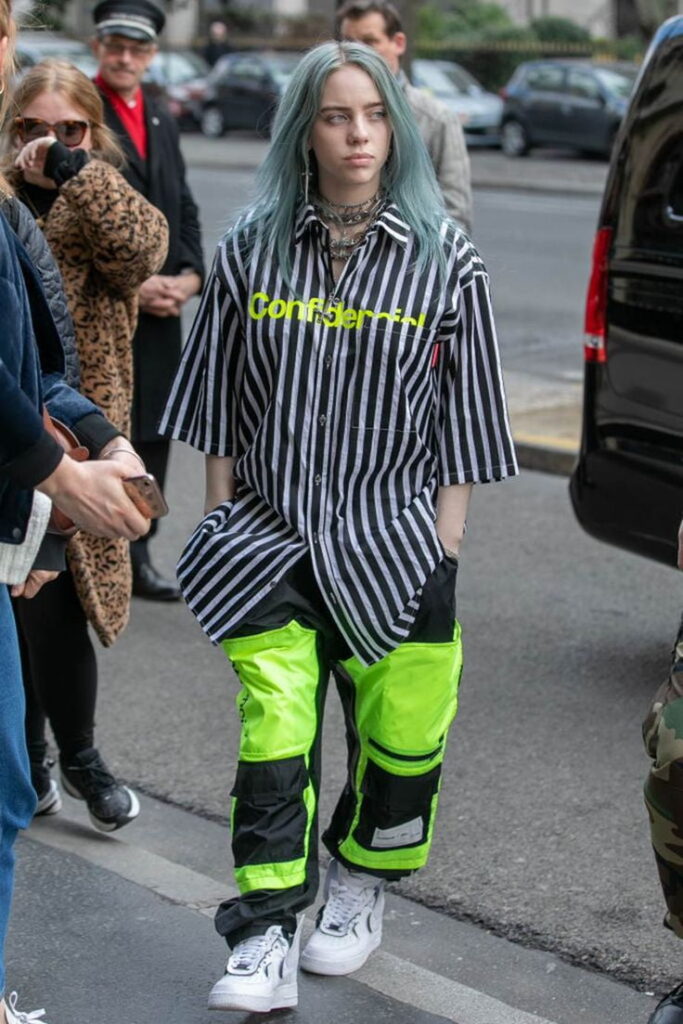
Billie Eilish alternative style exploded into public consciousness around 2016 with her debut single “Ocean Eyes.” But her visual identity truly solidified with the oversized clothing trend she championed relentlessly. She wore Gucci track pants three sizes too big, Supreme hoodies that swallowed her frame, and Louis Vuitton pieces reimagined for comfort. This wasn’t laziness. It was gender neutral fashion activism. Billie famously stated she didn’t want people knowing what her body looked like because she didn’t want them having opinions about it.
Her signature neon green roots paired with jet-black hair became instantly recognizable worldwide. That color choice wasn’t random. It was branding genius that made her unforgettable in a saturated market. Hip-hop heavily influenced her dark streetwear fashion choices during this period. She admired Tyler, The Creator’s bold style experimentation. Billie Eilish fashion collaborations with luxury brands validated streetwear as high fashion. Teenagers who couldn’t afford designer pieces could still capture her aesthetic with thrifted oversized clothes. She democratized alternative celebrity fashion beautifully.
The Neon Green Era: A Brand Identity Born
That specific shade of neon green became synonymous with Billie Eilish young success. Search “Billie Eilish” during 2018-2019 and every image features those radioactive roots. Billie Eilish identity and fame crystallized around that hair color. It appeared on Halloween costumes, fan art, and countless TikTok recreations. When she eventually transitioned away from neon green, it marked a significant chapter closure. The Billie Eilish age factor matters here. She was barely 17 when that look defined her, yet she possessed remarkable visual branding instincts.
The Gothic Elements in Billie Eilish’s Aesthetic
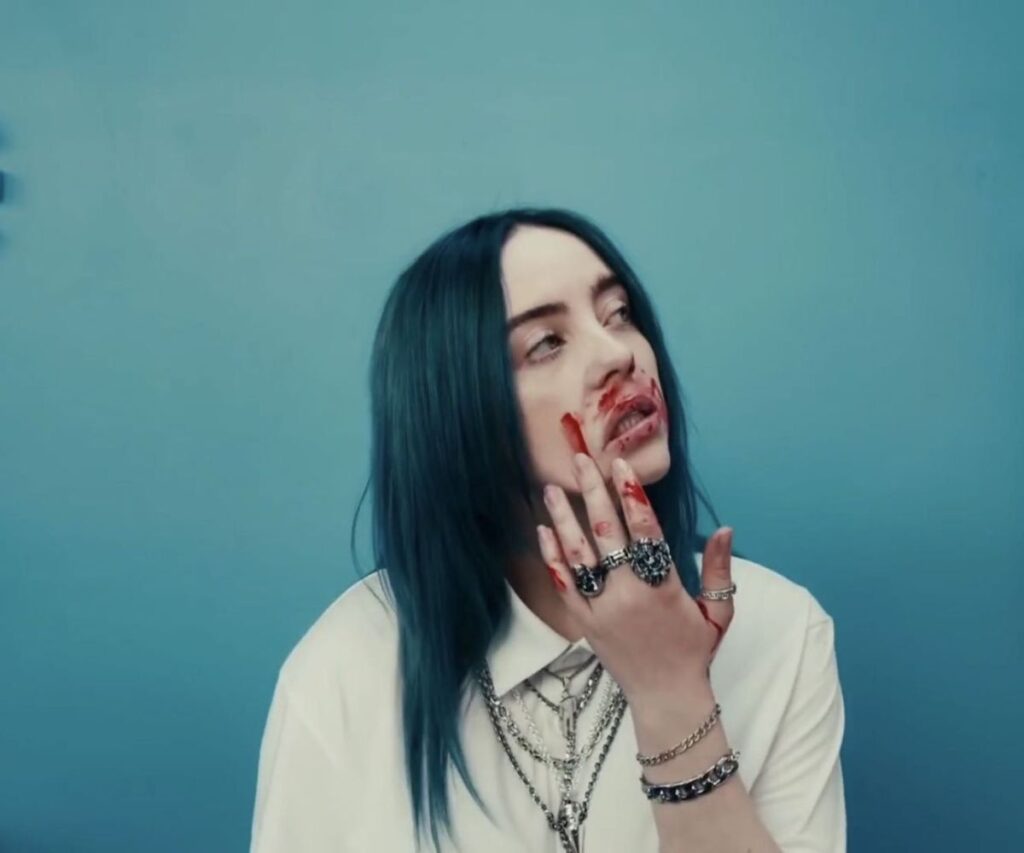
Billie Eilish goth aesthetic explained centers on nightmarish imagery throughout her visual work. Her music videos feature spiders crawling from mouths, black tears streaming down pale faces, and demonic figures lurking in shadows. These aren’t typical pop visuals. They’re post-goth aesthetic horror short films. “Bury a Friend” showcases needles injecting yellow liquid into her back while she writhes under hospital lighting. Deeply unsettling. Intentionally uncomfortable. Pure psychological horror that references everything from sleep paralysis to body dysmorphia.
Her melancholic, atmospheric sound carries gothic influence in fashion DNA even when lyrics discuss modern teenage anxieties. Tracks like “When the Party’s Over” drip with sorrowful beauty reminiscent of classic goth ballads. Victorian touches occasionally appear in photoshoots—ruffled collars, dramatic black dresses, theatrical lighting. Yet fashion purists debate whether she qualifies as “truly goth.” She lacks historical goth music roots. Her mainstream success contradicts goth’s underground ethos. Modern goth style gatekeepers argue she’s goth-adjacent at best, appropriating aesthetics without subcultural commitment.
Music Videos as Gothic Storytelling Canvases
Moody fashion aesthetic reaches peak intensity in her videography. “You Should See Me in a Crown” features a stunning Takashi Murakami animation where Billie swallows a spider that multiplies inside her body. The spider symbolism represents power consumption and transformation. “All the Good Girls Go to Hell” presents Billie as a fallen angel with burned wings, commenting on climate change through apocalyptic imagery. These videos function as conceptual art pieces. Directors she collaborates with understand dark romantic aesthetic storytelling. Each frame could hang in contemporary art galleries.
The Grunge Influences in Her Style and Music
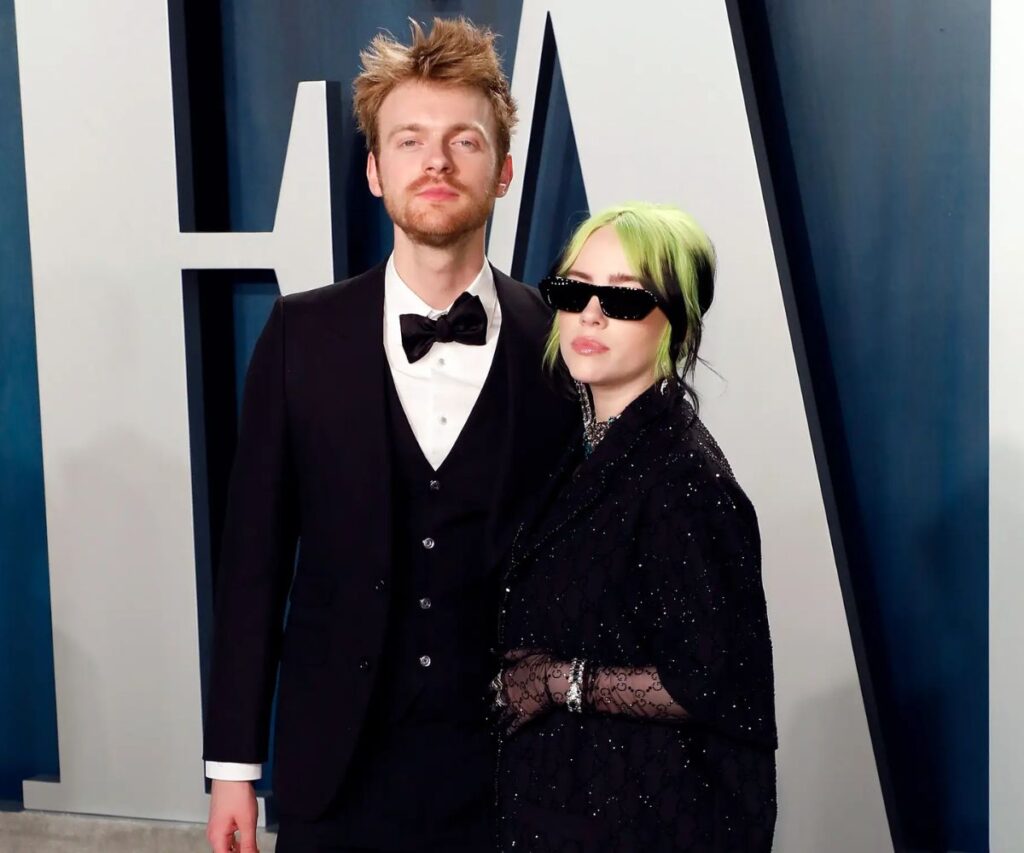
Billie Eilish fashion meaning connects deeply to grunge’s DIY ethos. She and her brother Finneas recorded her debut album in his tiny bedroom. No expensive studio. No major label interference. Just raw talent and Apple laptops. This mirrors how Nirvana recorded “Bleach” for approximately $600. Billie Eilish emotional honesty rejects Auto-Tune perfection that dominates modern pop. Her vocals crack, breathe, and whisper intimately. She sounds human, not processed.
Comfort absolutely supersedes conformity in her wardrobe philosophy. She rocks flannel shirts, baggy jeans, and beat-up sneakers regularly. These are grunge staples reimagined for 2020s streetwear sensibilities. Why does Billie Eilish dress dark? Partially because grunge taught generations that darkness expresses legitimate emotional states. Teenage angst deserves acknowledgment, not dismissal. Her early lyrics explored depression, suicidal ideation, and existential dread—themes Kurt Cobain addressed decades earlier. She channels 90s alternative youth culture through a Gen Z lens shaped by social media anxiety and climate crisis despair.
The 90s Revival Through a Gen Z Lens
Gen Z fashion icon status comes from updating rather than copying past trends. Billie doesn’t cosplay as a 90s kid. She extracts grunge’s emotional authenticity while discarding dated elements. Pre-internet grunge thrived on geographic isolation and underground scenes. TikTok fashion trends globalized and democratized alternative aesthetics instantly. Billie bridges these worlds. She proves grunge attitudes—rejection of superficiality, comfort prioritization, emotional rawness—transcend specific decades. Billie Eilish relatable image stems from making 90s rebellion relevant for smartphone-native teens facing entirely different challenges.
What Makes Billie’s Aesthetic “Something New”
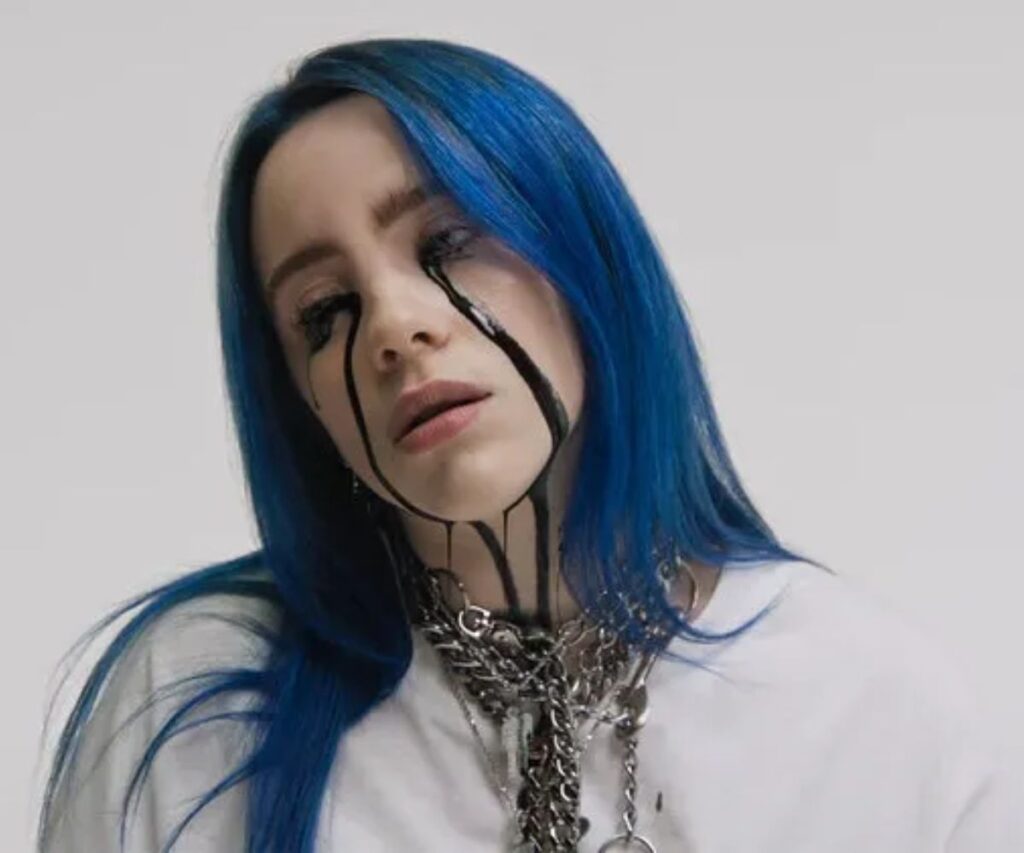
Is Billie Eilish goth or alternative? Neither label captures her completely. She pioneered something industry insiders now call “dark pop” or “sad girl pop.” Her modern dark aesthetic blends bedroom pop’s intimacy with trap music’s bass-heavy production. Melodically, she’s accessible enough for radio play. Thematically, she’s darker than most mainstream acts dare venture. This genre-blending extends visually. Dark streetwear fashion meets high fashion editorial meets horror film aesthetics meets sustainable fashion advocacy.
Billie Eilish Gen Z influence fundamentally changed how young people approach personal style. She proved you don’t need labels. Mix Supreme with Gucci. Pair pajamas with designer accessories. Create your own category. Her social media strategy brilliantly cultivated mystery while maintaining accessibility. She shares enough to feel relatable yet withholds enough to stay intriguing. Fashion without labels becomes possible when you’re confident enough to ignore gatekeepers. Instagram and TikTok enabled her to communicate directly with fans, bypassing traditional media that might have forced her into conventional boxes.
The Digital Native Advantage in Aesthetic Creation
Youth driven fashion trends now emerge from TikTok rather than runways. Billie understood this instinctively. Her Billie Eilish self expression through fashion feels native to digital spaces. She creates cohesive visual universes across platforms—matching Instagram grids, thematic TikTok content, and artistic music videos. Previous generations of alternative artists relied on MTV and magazine spreads. Billie Eilish perfume aesthetic even extends her visual universe into fragrance. The Eilish perfume bottle design—a sculptural female torso—sparked conversations about body image and femininity. Her Billie Eilish signature scent reportedly features warm vanilla and woodsy notes that smell comforting yet unconventional.
The Evolution: From Baggy to Blonde to Body-Positive

The “Happier Than Ever” era shocked fans when Billie debuted platinum blonde hair in March 2021. Gone were baggy clothes. Enter vintage pin-up glamour, form-fitting corsets, and old Hollywood elegance. Her 2021 Met Gala appearance channeled Marilyn Monroe in a peach Oscar de la Renta gown. The internet exploded. Billie Eilish fashion evolution took a dramatic turn that confused some fans. Was she abandoning her principles? Actually, she was demonstrating that self expression includes revealing your body on your own terms, not others’ demands.
British Vogue’s June 2021 cover featured Billie in lingerie and stockings—imagery she’d previously avoided. The shoot generated intense discourse about female autonomy and evolving boundaries. She explained she spent years hiding her body because of how people reacted to it. Now she felt empowered to showcase it. This wasn’t contradiction. It was growth. Recently, she’s returned to darker hair and minimalist goth fashion sensibilities with more mature sophistication. What aesthetic does Billie Eilish have currently? Something evolving, refusing stagnation, embracing artistic exploration.
| Album Era | Hair Color | Fashion Style | Key Visual Themes |
|---|---|---|---|
| When We All Fall Asleep (2019) | Neon green/black | Oversized streetwear, baggy everything | Nightmares, spiders, horror |
| Happier Than Ever (2021) | Platinum blonde | Vintage glamour, form-fitting | Old Hollywood, liberation |
| Hit Me Hard and Soft (2024) | Dark brown | Sophisticated dark elegance | Mature darkness, intimacy |
Album Eras as Visual Chapters
Billie Eilish career timeline reads like a visual novel with distinct chapters. Each album brought intentional aesthetic shifts that matched musical maturation. “When We All Fall Asleep, Where Do We Go?” presented teenage darkness—raw, unfiltered, shocking. “Happier Than Ever” explored newfound freedom and vintage femininity. Her latest work showcases confidence in both darkness and revelation. She’s no longer hiding but also not performing for others’ pleasure. Billie Eilish brand value increases because she refuses predictability.
The Cultural Impact: How Billie Eilish Redefined Gen Z Fashion

How Billie Eilish expresses herself through fashion fundamentally altered beauty standards for millions of young people. She normalized gender neutral fashion in mainstream pop culture. Teenage girls suddenly had permission to dress for comfort rather than attractiveness. Boys could embrace vulnerability without sacrificing credibility. Billie Eilish fan connection strengthened because she validated feelings society typically dismisses. Her impact on oversized clothing trend adoption cannot be overstated. Retailers noticed increased demand for gender-neutral, extremely oversized pieces.
Billie Eilish business ventures expanded her influence beyond music. Her Nike collaboration produced vegan sneakers emphasizing sustainability. Billie Eilish earnings reflect smart brand partnerships with companies aligning with her values. Billie Eilish net worth reportedly exceeds $50 million, proving authentic alternative aesthetics can be commercially successful. The celebrity perfume brand she launched became a top seller immediately. Billie Eilish perfume and aesthetic connection demonstrates how thoroughly she’s built a multimedia empire around coherent visual identity.
The Billie Effect on Streetwear and Luxury Fashion
High fashion brands scrambled to embrace baggy silhouettes after Billie popularized them. Designers who previously emphasized body-conscious cuts suddenly showcased oversized everything on runways. Celebrity fashion influence traditionally flowed from fashion to celebrities. Billie reversed this. She influenced designers rather than following their lead. Billie Eilish fashion collaborations with Gucci, Burberry, and others brought streetwear credibility to luxury houses desperate to connect with younger consumers. Her alternative celebrity fashion approach proved economically viable for the fashion industry.
Music Video Analysis: Visual Storytelling Through Dark Aesthetics

What style does Billie Eilish wear in her videos? Every outfit serves narrative purpose. “Bury a Friend” features clinical white clothing against sterile environments, emphasizing vulnerability and violation. The white contact lenses create inhuman detachment. Monster imagery lurking under beds taps into universal childhood fears. This isn’t random spookiness. It’s psychological horror examining anxiety disorders and intrusive thoughts. Billie Eilish goth aesthetic explained through this lens becomes therapeutic art rather than mere shock value.
“You Should See Me in a Crown” showcases power dynamics through royal imagery subverted by horror elements. The crown represents authority she claims by swallowing societal expectations (symbolized by the spider). Takashi Murakami’s signature colorful style contrasts beautifully with dark themes. “All the Good Girls Go to Hell” presents fallen angel Billie with burned wings, walking through a nighttime Los Angeles as oil drips down her white clothes. The apocalyptic climate change allegory hits harder because of visceral imagery. Billie Eilish dark aesthetic style elevates pop music videos into genuine cinematic experiences.
Symbolism as Signature: Spiders, Demons, and Nightmares
Recurring motifs create cohesive Billie Eilish dark fashion universe across projects. Spiders appear repeatedly, representing fears we internalize that grow inside us. Demons and nightmarish figures embody psychological struggles rather than literal monsters. Sleep and nightmares dominate her lyrical and visual storytelling because they’re liminal states where control dissolves. Why is Billie Eilish’s aesthetic dark? Because she’s processing genuine darkness—mental health struggles, body image issues, societal pressures—through art. Her symbolism sophisticated enough for academic analysis yet accessible enough for teenage fans to interpret personally.
The Future of Dark Aesthetics in Pop Culture
Artists like Olivia Rodrigo, Conan Gray, and Gracie Abrams emerged in Billie’s wake with similarly introspective aesthetics. The music industry now embraces emotional fashion expression as commercially viable. Mainstream pop no longer requires artificial happiness and sex appeal. Modern alternative aesthetic dominates youth culture because Billie proved authenticity resonates more powerfully than manufactured personas. Her place in pop culture history seems secure as the artist who normalized darkness in an era obsessed with Instagram perfection.
Billie Eilish Age and How It Shaped Her Dark Aesthetic

Billie Eilish age positioned her uniquely within entertainment history. Born December 18, 2001, she achieved global recognition at merely seventeen with “Bad Guy” dominating charts in 2019. She became the youngest artist to win all four major Grammy categories (Album, Record, Song of the Year, and Best New Artist) at age 18 in 2020—a historic achievement that cemented her Billie Eilish young success. Most people at that age are still discovering personal identity, yet she navigated unprecedented fame while maintaining creative control.
Billie Eilish early fame could have pressured her toward conventional pop-star imagery, yet she resisted industry expectations relentlessly. Her youth became an asset rather than limitation, allowing authentic connection with Gen Z dark fashion enthusiasts worldwide. Now at 23 years old (as of January 2025), she’s matured considerably while maintaining artistic integrity. Billie Eilish fashion evolution continues as she explores new aesthetics, recently incorporating more fitted silhouettes, vintage glamour, and varied colors beyond her signature black. Her Billie Eilish career timeline demonstrates that personal style naturally evolves—authenticity doesn’t mean stagnation. She proved teenagers don’t need to conform to adult expectations about femininity or celebrity fashion influence.
Billie Eilish Perfume: How Her Fragrance Reflects Her Aesthetic

Billie Eilish perfume extends her visual identity into olfactory space with remarkable consistency. Launched in November 2021, the Eilish fragrance features warm amber, vanilla, cocoa, tonka bean, and woody notes—intimate scents that feel cozy rather than overtly seductive. Within its first month, it became one of the best-selling celebrity fragrances, reportedly generating over $3 million in sales during the initial launch week alone. Billie Eilish signature scent aligns perfectly with her moody fashion aesthetic, offering depth without aggression or conventional floral femininity.
The Billie Eilish perfume bottle design became instantly iconic—resembling a sculptural bronze human figure in a reclined position, continuing her commitment to artistic presentation and body positivity themes. This celebrity perfume brand succeeds because it maintains thematic consistency across all touchpoints. The Eilish perfume aesthetic doesn’t contradict her clothing choices or musical themes—everything cohesively expresses the same introspective, emotionally complex persona. She followed up with “Eilish No. 2” in 2022, expanding her fragrance empire. This demonstrates how Billie Eilish brand value extends beyond music into comprehensive lifestyle branding. The perfume line reinforces her dark romantic aesthetic while remaining commercially accessible, proving alternative celebrity fashion sensibilities translate successfully across product categories.
Billie Eilish Net Worth and Her Influence in Fashion & Music

Billie Eilish net worth is estimated between $75-100 million as of 2025, according to multiple financial publications. These Billie Eilish earnings accumulated through multiple revenue streams: album sales exceeding 100 million records worldwide, streaming royalties (her Spotify streams surpassed 100 billion in 2024), sold-out concert tours including her “Happier Than Ever” world tour, and strategic brand partnerships. Her financial success granted rare independence, enabling creative decisions without corporate pressure that typically constrains young artists.
Billie Eilish business ventures showcase remarkable strategic thinking. Beyond her fragrance lines generating tens of millions annually, she partnered with Nike in 2021 for sustainable, vegan sneaker collections that sold out within hours. Her collaboration with Adobe Creative Cloud, Gucci beauty campaigns, and Apple TV+ documentary “Billie Eilish: The World’s a Little Blurry” (which reportedly earned her $25 million) diversified income while maintaining brand alignment. Her celebrity fashion influence manifests in surprising ways—luxury houses like Gucci embraced her gender neutral fashion sensibility, fundamentally shifting their youth marketing strategies. Billie Eilish fashion collaborations proved that alternative youth culture aesthetics drive massive consumer interest. Designer brands reported increased sales in oversized, dark streetwear fashion pieces following her popularization of the style. Her Billie Eilish Gen Z influence extends beyond individual style—she’s reshaping how entire industries approach youth culture, proving profitability doesn’t require conventional beauty standards or sexualized imagery.
How Billie Eilish Balances Fame, Identity, and Self-Expression
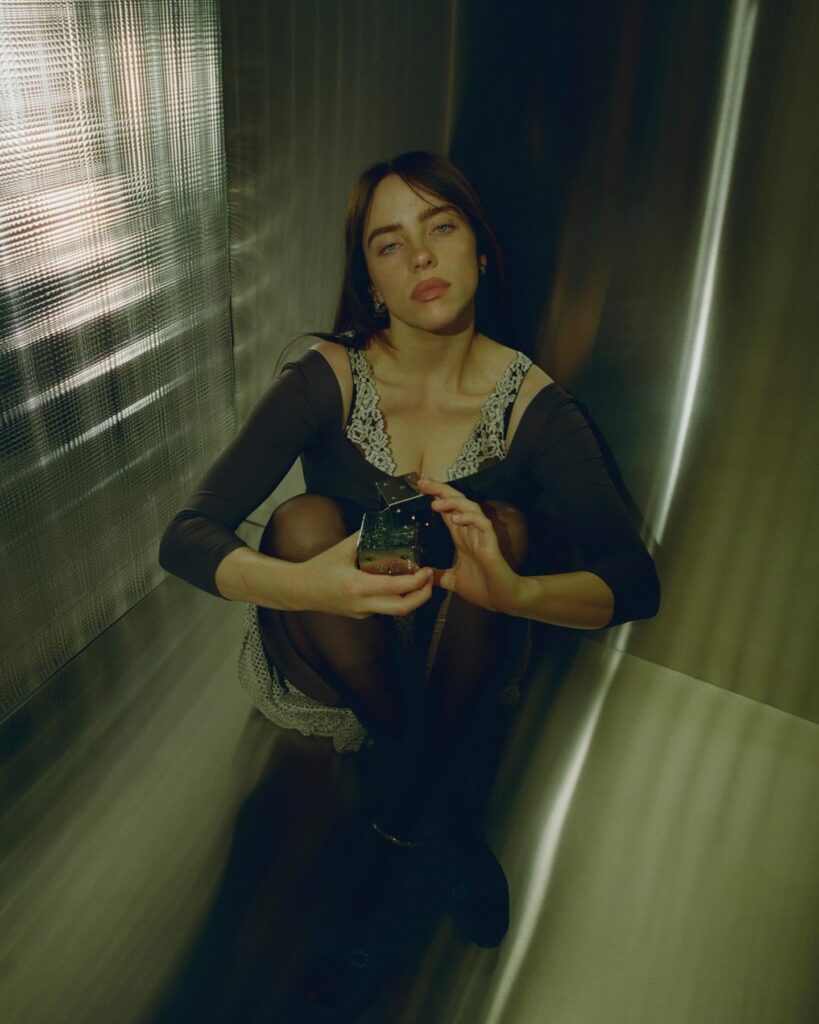
Billie Eilish identity and fame create inherent tension that she navigates through firm boundaries. She’s spoken openly in interviews about experiencing depression, body dysmorphia, and Tourette syndrome—vulnerabilities that make her Billie Eilish relatable image even more powerful. Global recognition threatens authenticity, yet she maintains control by refusing certain interview topics, carefully curating her visual identity, and openly discussing mental health challenges without glamorizing them. Billie Eilish dark fashion functioned initially as protective barrier against invasive celebrity culture and body objectification.
Her approach fundamentally redefines success in modern entertainment. Rather than maximizing visibility at any cost, she prioritizes psychological wellbeing and artistic integrity. This Billie Eilish personality trait—valuing self-preservation over fame—resonates deeply with audiences exhausted by performative celebrity culture and artificial perfection on social media. When she debuted her blonde transformation and more revealing clothing in 2021, critics questioned her consistency. She responded powerfully in Vogue, explaining that feminism means choosing how you present yourself, whether covered or exposed. Her edgy fashion style isn’t rebellion for its own sake; it’s thoughtful Billie Eilish self expression that honors her internal experience rather than external expectations.
Billie Eilish emotional honesty extends to discussing uncomfortable topics—her Apple TV+ documentary showed panic attacks, family tensions, and the psychological toll of touring. This transparency strengthens her Billie Eilish fan connection because fans see genuine humanity rather than curated perfection. At 23, she’s successfully transitioned from teenage sensation to mature artist without losing credibility, demonstrating that youth driven fashion trends can evolve into lasting cultural impact. Her influence proves that modern alternative aesthetic approaches and fashion without labels mentalities can dominate mainstream culture when executed with consistency and genuine conviction. Why fans love Billie Eilish ultimately stems from recognizing that her public image reflects actual personality rather than manufactured persona.
Conclusion
Billie Eilish dark aesthetic transcends simple categorization as goth, grunge, or anything existing before her. She synthesized influences from multiple alternative subcultures, added contemporary elements like sustainability advocacy and social media savvy, and created something uniquely her own. Her Billie Eilish Gen Z influence reshaped fashion industry expectations and beauty standards globally. Whether she’s wearing oversized clothing trend pieces or vintage glamour, she maintains authentic self expression that millions find inspiring.
Understanding what aesthetic does Billie Eilish have requires abandoning rigid labels. She’s a Gen Z fashion icon who proved you can dominate mainstream pop while maintaining artistic integrity and alternative youth culture values. Her lovely personality, emotional honesty, and refusal to conform created a blueprint for future artists. Billie Eilish cultural impact extends far beyond music into fundamental conversations about identity, mental health, and authentic self-presentation in the digital age.
FAQs About Billie Eilish’s Dark Aesthetic
Is Billie Eilish goth or something else?
Billie Eilish is not strictly goth. Her Billie Eilish dark aesthetic incorporates darkness, emotional depth, and alternative influences, but it does not follow traditional goth fashion such as Victorian silhouettes or subcultural symbolism. Instead, her style exists outside rigid labels, forming a modern alternative aesthetic of its own.
What aesthetic does Billie Eilish have?
Billie Eilish embodies a modern alternative fashion aesthetic that blends dark streetwear, high-fashion experimentation, and comfort-driven styling. Her look emphasizes emotional self-expression, oversized silhouettes, and individuality rather than adherence to a single subculture like goth or grunge.
Why does Billie Eilish prefer dark fashion?
Her Billie Eilish dark fashion style reflects both personal comfort and resistance to public objectification. Dark color palettes support her introspective personality, while oversized clothing reinforces bodily autonomy, allowing her to control how her image is perceived.
How has Billie Eilish’s style evolved over time?
The Billie Eilish fashion evolution began with oversized neon streetwear and has gradually expanded into vintage-inspired looks, structured tailoring, and occasional fitted silhouettes. Despite this evolution, her core values—comfort, authenticity, and emotional storytelling—remain central.
What type of style does Billie Eilish have?
Billie Eilish’s style can best be described as alternative celebrity fashion with influences from dark pop culture aesthetics, streetwear, and avant-garde design. Her look challenges gender norms and promotes fashion without labels.
What has Billie Eilish been diagnosed with?
Billie Eilish has publicly spoken about living with Tourette syndrome and experiencing mental health challenges, including anxiety. These experiences influence her artistic identity, emotional lyrics, and introspective visual aesthetic.
Is Billie Eilish LGBTQ+?
Billie Eilish has expressed attraction to women and openly supports the LGBTQ+ community, though she avoids rigid identity labels. Her openness reinforces her image as a boundary-breaking artist who values self-definition.
What style genre is Billie Eilish?
Her style genre blends alternative pop fashion, dark minimalist aesthetics, and contemporary streetwear. Rather than fitting into goth, grunge, or punk, Billie Eilish represents a new era of dark fashion driven by emotion and authenticity.
Final Verdict: Goth, Alternative, or a New Era of Dark Fashion?
Billie Eilish’s dark aesthetic resists traditional categorization because it was never meant to fit existing frameworks. She’s neither purely goth nor conventionally grunge—she’s pioneering alternative celebrity fashion that prioritizes individuality over subcultural membership. Her influence signals shifting paradigms in how young people construct identity through clothing.
This contemporary goth look evolution demonstrates that TikTok fashion trends and digital culture enable personalized aesthetics impossible in previous eras. Billie Eilish’s relatable image proves authenticity trumps conformity. She’s not creating a new subculture requiring specific rules—she’s championing freedom itself. Her legacy will be remembered not for inventing a style, but for validating millions to dress however feels genuine, darkness included.
If you’re interested in Jenna Ortega’s Goth Style, be sure to check out our How Jenna Ortega Redefined Goth Fashion to explore her unique and dark lifestyle!
My name is Amanda Lee, and I’m passionate about the gothic lifestyle. I created GothicMood to share my love for dark fashion, beauty, and culture. Here I recommend gothic-inspired products, style tips, and ideas to help others embrace and express their unique gothic identity.