


People keep trying to put Billie Eilish in a box. Goth. Grunge. Alt-pop. Dark indie. None of those labels stick for long.
She showed up on SoundCloud at 13, released a debut album that sounded like a horror film scored in a bedroom, and looked like nothing pop music had produced before. Neon green roots. Oversized everything. Spider imagery crawling through music videos that made people genuinely uncomfortable. Then she cut her hair, went blonde, wore a corset, and the internet declared her a different person.
She wasn’t. That’s the point.
This article breaks down what Billie Eilish’s aesthetic actually is, where it comes from, how it’s shifted across three album eras, and why it keeps resonating with people who feel like they don’t fit anywhere specific.
Understanding Billie Eilish’s Gothic Identity
Billie Eilish did not come up through the goth scene. She didn’t start in clubs or underground shows. She came up on SoundCloud at 13 and reached global fame by 17. That context matters.
Her cultural impact came from doing the opposite of what pop expected. While her peers chased radio-friendly gloss and carefully managed images, she wore clothes three sizes too big, let her music sit in discomfort, and talked openly about things young female artists weren’t supposed to discuss. Depression. Body image. Suicidal ideation. She put it all in her lyrics and on her face, and her audience recognized it immediately.
The ‘gothic’ read comes less from subcultural affiliation and more from emotional territory. Dark imagery, melancholic themes, a refusal to perform happiness she doesn’t feel. Those qualities connect her to goth sensibility without making her a goth artist in any traditional sense.
Why Billie’s Aesthetic Transcends Traditional Pop Fashion
Compare her to what was dominating pop at the same time. Ariana Grande’s sweet femininity. Taylor Swift’s polished storytelling. Both presented carefully managed, conventionally attractive images. Billie showed up looking like she’d dressed in the dark, wearing brands she actually liked rather than brands that liked her back.
That gap became her brand. Not the clothes themselves, but the authenticity behind the choices. She dressed for herself. Teenagers noticed. Then the fashion industry noticed. Then luxury houses started chasing the silhouette she’d been wearing since middle school.
Defining Goth vs. Grunge: The Key Differences That Matter

Before placing Billie anywhere, you need to know what you’re comparing her to.
Goth came out of post-punk Britain in the late 1970s. Bauhaus, Siouxsie and the Banshees, The Cure. Dramatic makeup, Victorian-influenced clothing, heavy eyeliner, lace, corsets, a preoccupation with romantic darkness and literary horror. Edgar Allan Poe and Gothic novels fed the aesthetic as much as the music did. Goth is theatrical. It’s intentional. It celebrates melancholy with a kind of beauty.
Grunge came out of Seattle in the early 1990s. Kurt Cobain. Flannel shirts from thrift stores. Ripped jeans. Converse worn into the ground. Deliberate dishevelment as a rejection of 80s excess and commercial polish. Grunge’s emotion was rage and apathy. Goth’s emotion was longing and sorrow. Both lived in darkness, but expressed it completely differently.
| Aspect | Goth Fashion | Grunge Style | Billie’s Aesthetic |
|---|---|---|---|
| Origin | 1970s UK post-punk | 1990s Seattle alternative | 2010s digital generation |
| Key Colors | Black, deep purple, burgundy | Black, flannel patterns, earth tones | Black, neon green, monochrome |
| Silhouette | Fitted, dramatic, Victorian | Oversized, disheveled, layered | Extremely oversized, gender-neutral |
| Influences | Romantic literature, Victorian era | Anti-establishment, DIY ethos | Streetwear, horror, sustainability |
| Makeup | Heavy, theatrical, pale foundation | Minimal, natural, “unwashed” look | Subtle but distinctive, often none |
| Attitude | Romantic melancholy | Apathetic rebellion | Introspective authenticity |
Musical DNA: How Sound Shapes Style in Both Subcultures
Goth music creates atmosphere. Synthesizers, reverb-drenched guitars, ethereal vocals built for shadowy spaces. Grunge hits harder. Distorted guitars, screaming into the void, volume as catharsis.
Billie’s production style sits closer to goth’s atmospheric DNA than grunge’s attack. Bass-heavy, whispered, intimate. Her vocals breathe and crack in ways that feel private. The sound dictates the visual. Dark and internal, not loud and confrontational.
Billie’s Early Oversized Streetwear Era
‘Ocean Eyes’ appeared on SoundCloud in 2016. Minimal production, a 14-year-old’s voice over a sparse track her brother Finneas wrote for his band. It spread on its own because it was genuinely good. The visual identity came shortly after.
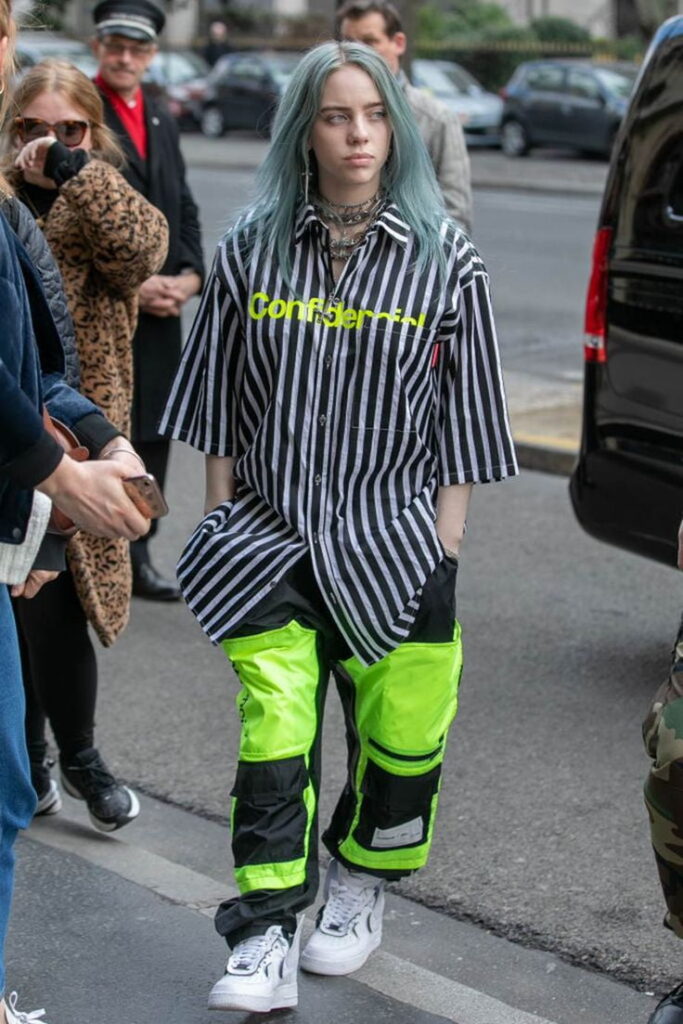
By the time ‘When We All Fall Asleep, Where Do We Go?’ arrived in 2019, the look was fully formed. Gucci track pants sized up three times. Supreme hoodies swallowing her frame. Louis Vuitton pieces worn for comfort rather than display. Hip-hop influenced the silhouette more than goth or grunge did. She’s cited Tyler, The Creator’s bold style instincts as a reference point.
The size of her clothes was the statement. She explained it directly: she didn’t want people knowing what her body looked like because she didn’t want them forming opinions about it. That reasoning landed hard for teenagers who’d spent years being assessed, commented on, and told to dress for other people’s comfort. She dressed for her own.
The Neon Green Era: A Brand Identity Born
The neon green roots against jet-black hair became one of the most recognizable looks in pop culture between 2018 and 2020. You could identify her from a thumbnail. That specificity is rare.
It wasn’t accidental. She was 16 when that color became her signature. Most people at that age are still figuring out what they want to wear. She was building a visual brand sharp enough to land on Halloween costumes and fan art worldwide. When she finally moved away from the green, it felt like a chapter closing. Because it was.
The Gothic Elements in Billie Eilish’s Aesthetic
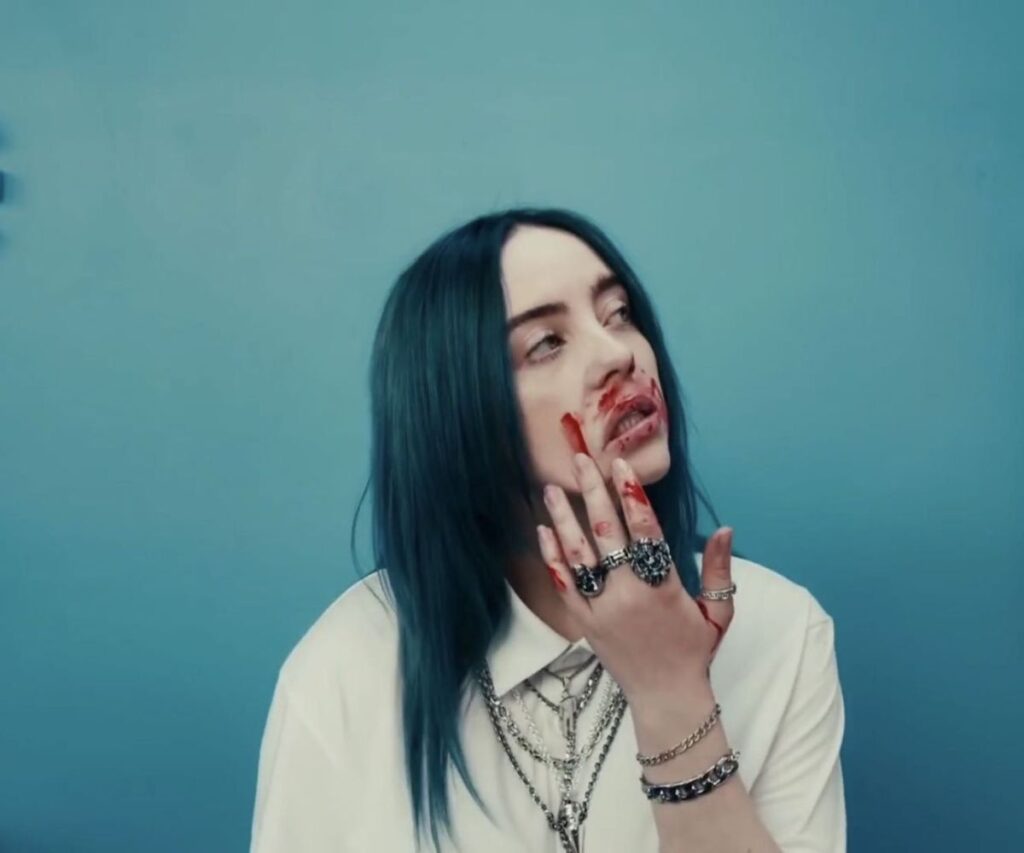
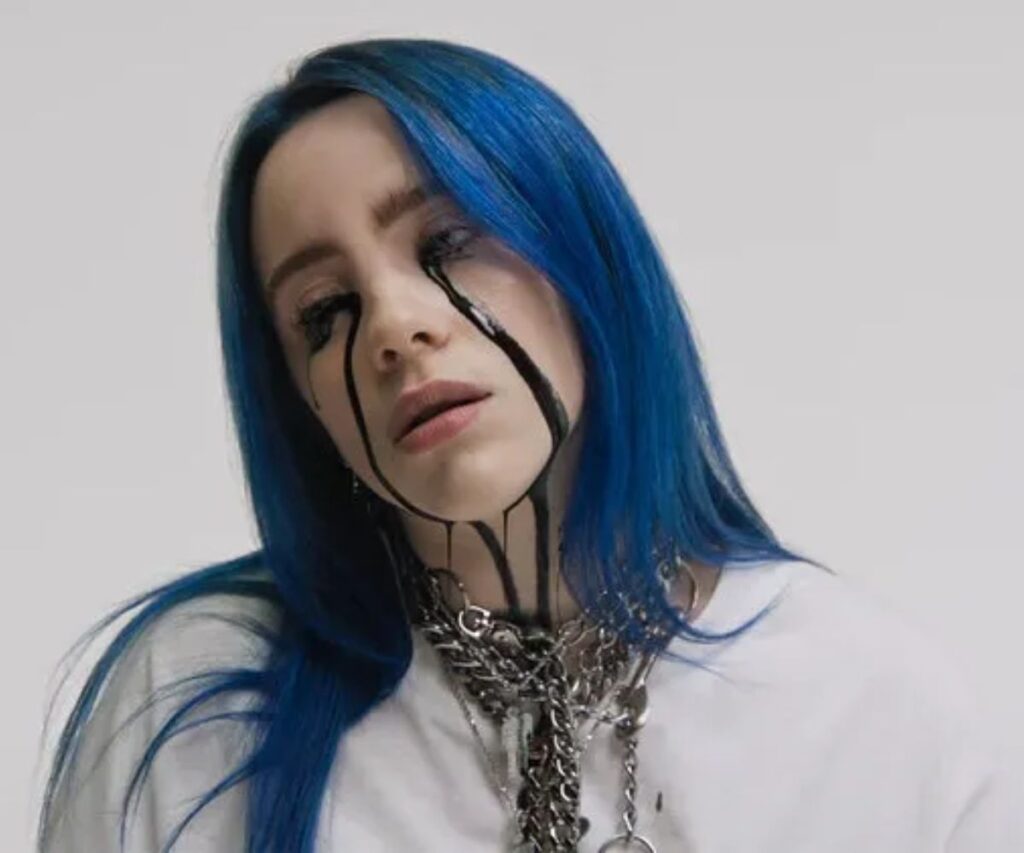
Her music videos are where the goth connection becomes clearest. ‘Bury a Friend’ puts her under hospital lighting in clinical white while needles push into her back and she writhes. ‘When the Party’s Over’ shows black tears streaming down pale skin. ‘You Should See Me in a Crown’ features a spider multiplying inside her body, animated by Takashi Murakami in his signature saturated style.
These aren’t typical pop visuals. They’re psychological horror. Sleep paralysis. Body invasion. Intrusive thoughts given form. The aesthetic doesn’t reference goth’s Victorian romanticism directly, but it lives in the same emotional territory: darkness taken seriously, fear treated as something worth expressing rather than hiding.
The debate among goth community members about whether she qualifies is real and legitimate. She lacks historical goth music roots. Her mainstream commercial success contradicts goth’s underground identity. She draws from gothic imagery without living inside gothic subculture. Goth-adjacent is probably the honest assessment.
Music Videos as Gothic Storytelling Canvases
‘You Should See Me in a Crown’ uses spider symbolism to examine power and what it costs to consume it. ‘All the Good Girls Go to Hell’ presents Billie as a fallen angel with burned wings walking through a Los Angeles drowning in oil. The climate change allegory hits harder because of the visceral imagery rather than despite it.
Each video functions as a short film. Directors who work with her understand that the visual universe needs to match the emotional weight of the music. She doesn’t do performance for its own sake. The darkness has to mean something.
The Grunge Influences in Her Style and Music
The grunge connection is real but less visual than it is philosophical.
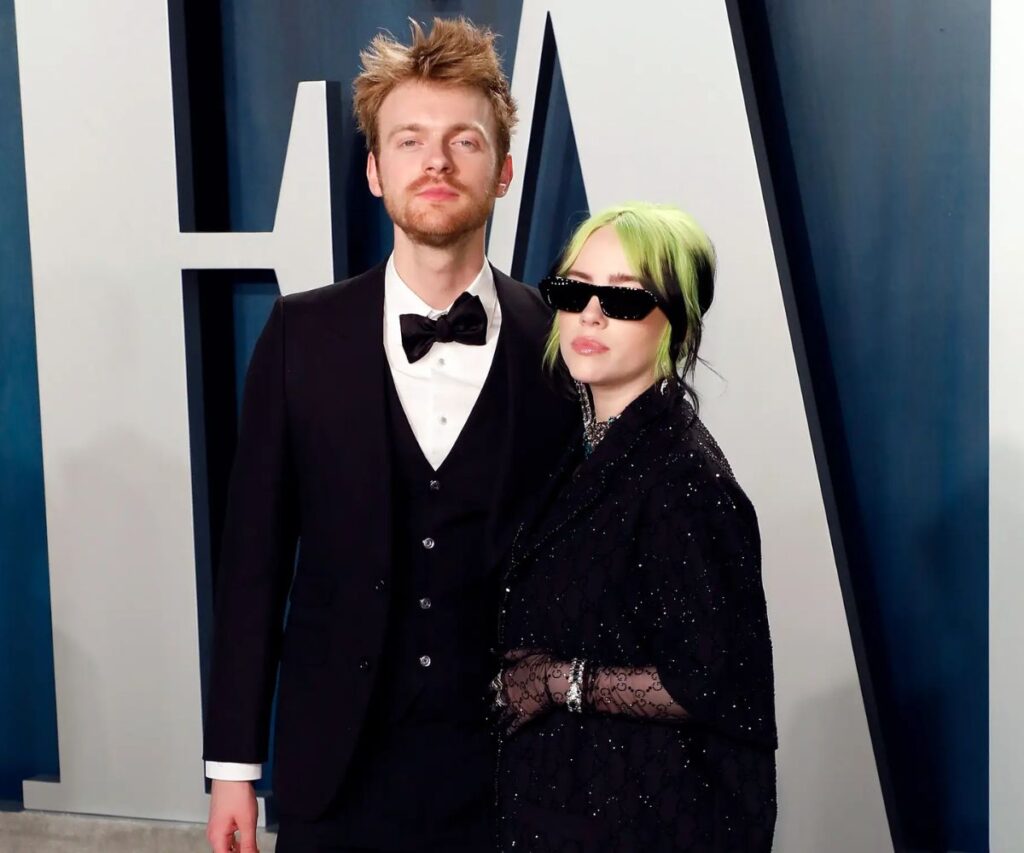
She and Finneas recorded ‘When We All Fall Asleep’ in his bedroom. No major studio. No industry interference. Just two siblings with laptops and instruments making something honest. Nirvana recorded ‘Bleach’ for roughly $600. The ethos is the same: do it yourself, keep it real, don’t let money or access determine whether you get to make art.
Her vocals follow the same logic. They crack. They breathe. She whispers when whispers feel right and pushes when the song demands it. Auto-Tune perfection has no place here. Grunge rejected processed pop surfaces. So does she.
The clothes reflect it too. Flannel shirts. Baggy jeans. Worn sneakers. Grunge staples updated for streetwear sensibilities but carrying the same comfort-over-conformity message. Her early lyrics explored depression, suicidal thoughts, and existential dread. The emotional territory Cobain mapped for a generation. She walked through it from a Gen Z starting point: social media anxiety, climate grief, parasocial fame at a very young age.
The 90s Revival Through a Gen Z Lens
She doesn’t cosplay the 90s. She extracts what still works and drops what doesn’t.
Pre-internet grunge lived in geographic pockets. Seattle had a scene. London had a scene. Alternative culture spread slowly through physical networks. TikTok made that speed irrelevant. A sound or a look can circle the globe in 48 hours now. Billie came up entirely inside that accelerated world.
She took grunge’s emotional principles and stripped away the era-specific trappings. The rejection of superficiality translates. The comfort-over-conformity reads across generations. The emotional rawness still hits. She proved those values don’t belong to a decade.
What Makes Billie’s Aesthetic “Something New”
Here’s the honest answer: she’s not goth. She’s not grunge. She’s not a hybrid of the two. She built something that borrows from both without committing to either.
Industry people call it dark pop or sad girl pop. Those terms capture part of it. Her production blends bedroom intimacy with trap’s bass weight. The music is dark enough to mean something and accessible enough to play on the radio. The aesthetic does the same thing: dark streetwear meets high fashion editorial meets horror film reference meets sustainable fashion advocacy.
No previous artist occupied that exact combination. She didn’t find a gap and fill it. She created the category by following her own instincts and getting famous enough that the category had to be named.
The Digital Native Advantage in Aesthetic Creation
She grew up making content. Instagram, SoundCloud, then TikTok. She understands how a visual universe builds across platforms because she built one before she had a label.
Her aesthetic exists as a coherent world across music videos, social media, merchandise, and fragrance. The Eilish perfume bottle, launched in November 2021, is a sculptural bronze figure in a reclined position. It generated immediate conversation about body image and design. Within its first month, it reportedly brought in over $3 million in sales. The scent: warm amber, vanilla, cocoa, tonka bean, woody notes. Intimate. Cozy. Not conventionally seductive.
The bottle and the scent both follow the same logic as her clothes. Comfort and depth over conventional appeal. Everything points the same direction.
How Billie Eilish Balances Fame, Identity, and Self-Expression
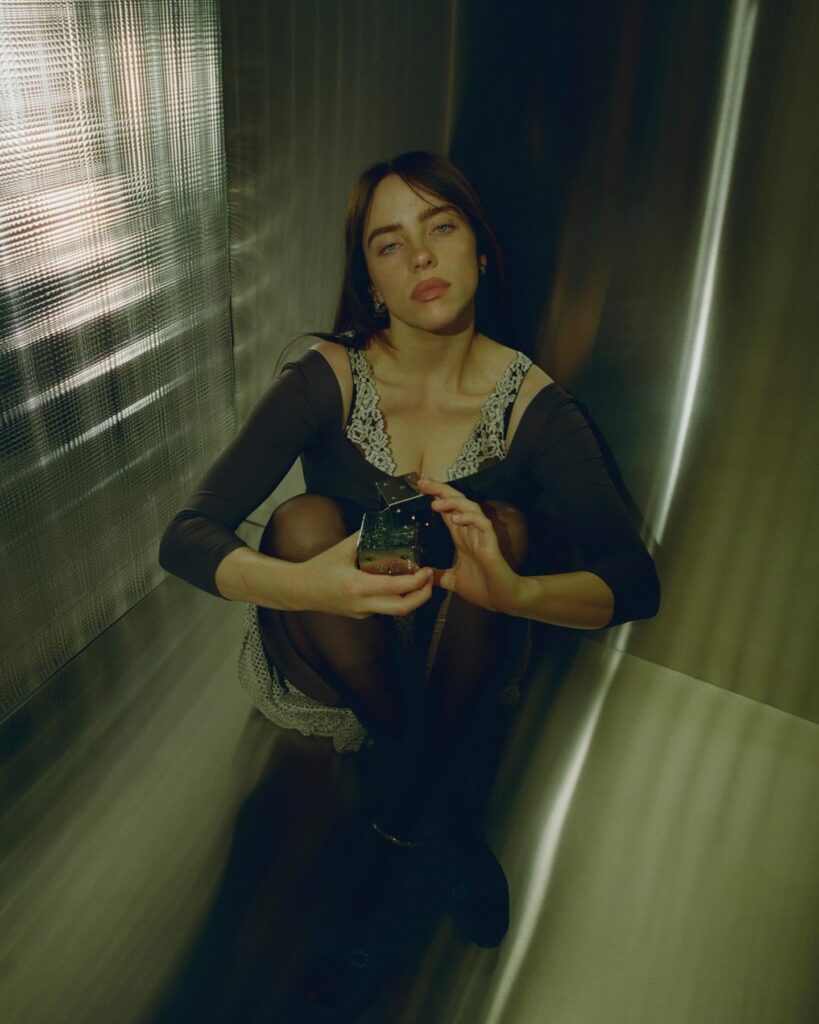
She’s spoken publicly about depression, body dysmorphia, and Tourette syndrome. Not to generate sympathy, but because those experiences are real and they shaped her work. Her Apple TV+ documentary showed panic attacks and family tension alongside the Grammy wins. She shared the cost of what she was doing because pretending there was no cost would have been dishonest.
She maintains control through boundaries most artists her age didn’t have the leverage to enforce. She turns down certain interview topics. She curates her visual identity carefully. She explained her 2021 transformation in her own words before anyone else could define it for her.
At 23, she’s moved from teenage sensation to mature artist without losing the credibility that came from being genuine in the first place. That transition is harder than it looks. Most artists don’t make it cleanly.
Conclusion
She’s not goth. She’s not grunge. She’s not a hybrid trying to split the difference.
Billie Eilish built an aesthetic from her own emotional reality and cultural moment: digital nativity, social media anxiety, body autonomy, genuine darkness expressed through pop-accessible music. She took goth’s willingness to sit with discomfort, grunge’s rejection of manufactured perfection, streetwear’s comfort logic, and horror’s visual vocabulary. Then she combined them in a way that made sense for someone who grew up on the internet and got famous before she was old enough to vote.
Her legacy isn’t a new subculture with rules to follow. It’s a demonstration that you can be commercially dominant and aesthetically honest at the same time. That the darkness in you can be your work rather than something to manage away.
FAQs About Billie Eilish’s Dark Aesthetic
Is Billie Eilish goth or something else?
She’s not strictly goth. Her aesthetic draws from gothic imagery and emotional territory but doesn’t follow traditional goth subculture: no Victorian silhouettes, no subcultural affiliation, no underground scene roots. She occupies her own category, which critics and industry people loosely call dark pop or alternative pop.
What aesthetic does Billie Eilish have?
A modern alternative aesthetic built from dark streetwear, high fashion experimentation, horror visual references, and comfort-driven styling. The through line is emotional authenticity rather than adherence to any specific subculture.
Why does Billie Eilish prefer dark fashion?
Two reasons she’s given directly: personal comfort and protection from objectification. Dark, oversized clothing lets her control how her image reads. The color palette matches her emotional and artistic identity. Both reasons are straightforward and consistent across years of interviews.
How has Billie Eilish’s style evolved over time?
Three clear phases. Oversized dark streetwear with neon green signature hair from 2016 to 2020. Vintage-inspired, form-fitting looks with platinum blonde hair from 2021 to 2022. Sophisticated dark elegance with darker hair from 2024 onward. The core values stay constant. The expression of them changes.
Is Billie Eilish LGBTQ+?
She has expressed attraction to women and openly supports the LGBTQ+ community. She avoids rigid identity labels, which aligns with how she approaches most categories people try to place her in.
What style genre is Billie Eilish?
Dark alternative pop. Her style blends alternative pop aesthetics, dark minimalism, and streetwear. She doesn’t fit cleanly into goth, grunge, or punk. She represents something that came after all of them, built from the same emotional raw material.
If you’re interested in Jenna Ortega’s Goth Style, be sure to check out our How Jenna Ortega Redefined Goth Fashion to explore her unique and dark lifestyle!
1 thought on “Billie Eilish’s Dark Aesthetic: Is It Goth, Grunge, or Something New?”