

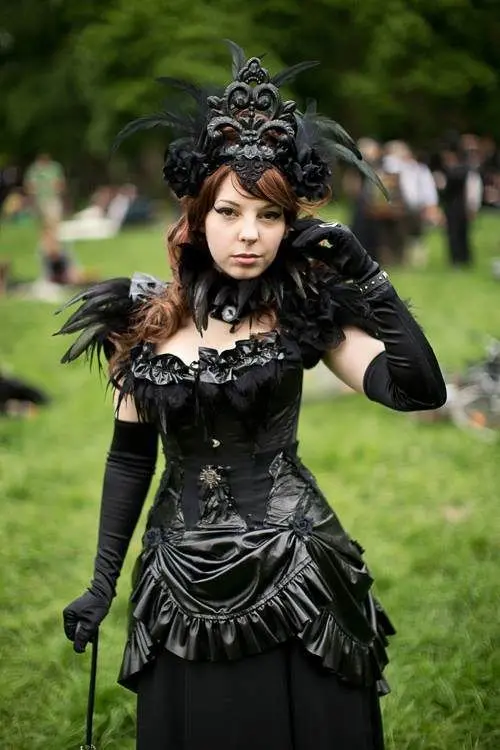
You don’t need a boutique budget to build a wardrobe that actually looks gothic. A pair of fabric scissors, some bleach, a handful of safety pins, and a thrifted black dress will carry you further than most people expect.
The Gothic DIY dress projects below are organized by what you’re working on: tops, bottoms, outerwear, accessories, and full-outfit builds.
Pick the one that matches your skill level and the substyle you’re going for. Then do the next one.
Know Your Substyle Before You Start Cutting
The three most common goth directions point toward different techniques. Romantic goth leans into lace trim, flowing fabric, and Victorian silhouettes.
Punk goth wants distressed denim, visible studs, and safety pins doing actual structural work.
Cyber goth reaches for metallic accents, harder textures, and industrial details. Most gothic wardrobes pull from two or three of these at once. Use them as a starting point, not a rulebook.
What to Have Ready
Gather these before you start any project. Running out of material mid-cut is how mistakes happen.
- Fabric scissors, sharp enough to cut clean lines without fraying
- Black fabric markers and textile paint
- Black lace fabric, one to two yards to start
- Metal studs, pyramid spikes, and chain
- Safety pins and D-rings
- Fabric glue or a basic sewing kit with black thread
- Bleach and stencils for distressing
- Velvet ribbon for chokers and trim
A starter supply run costs somewhere between fifteen and thirty dollars, depending on what you already own and which craft store you’re shopping at.
Prices vary enough by region and sale timing that a single fixed number isn’t worth trusting. Check your local store’s clearance bin before buying anything new.
DIY Gothic Tops and Shirt Transformations
Creating Cutout Gothic Shirts
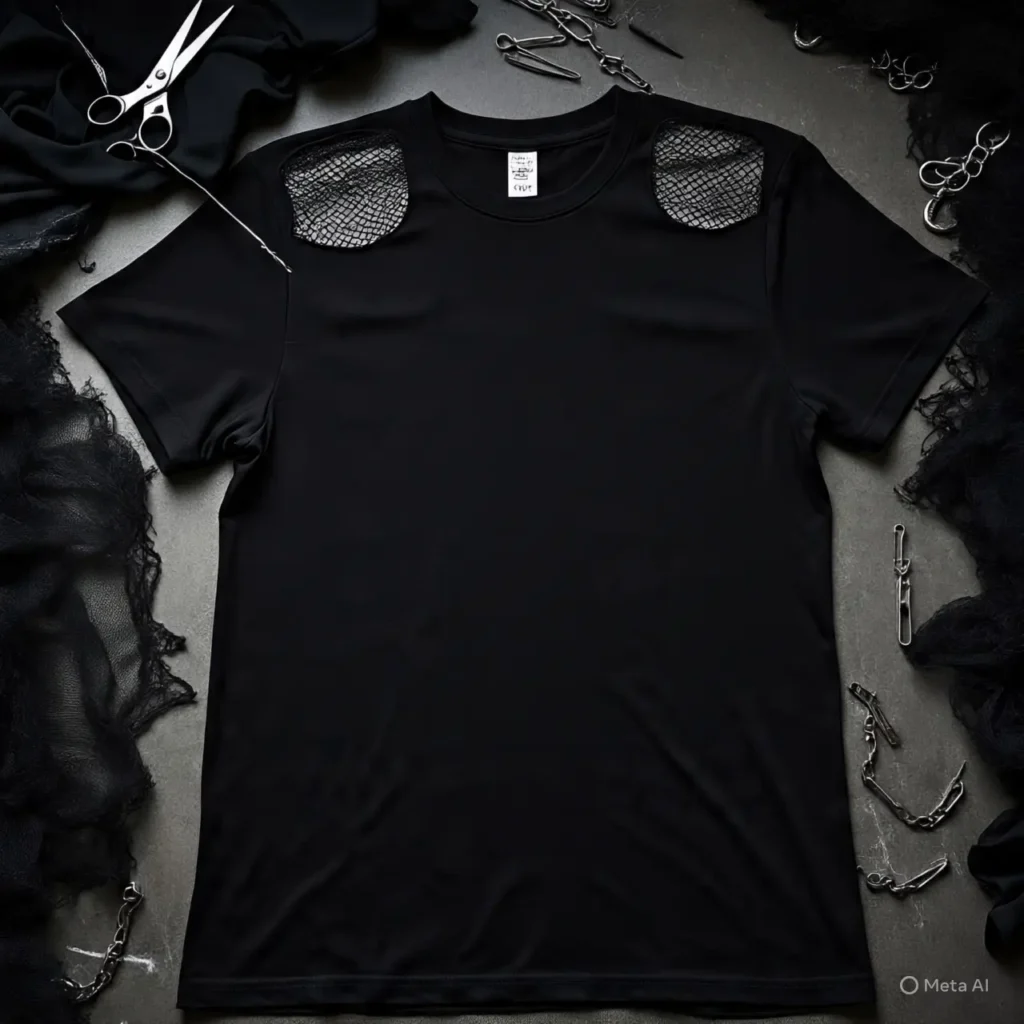
This is the fastest project on the list. You need a fitted black tee and a pair of sharp scissors. That’s it. The result depends almost entirely on where you cut and how clean your lines are, so go slow the first time.
- Choose a fitted black t-shirt. Oversized shirts make cutouts harder to control.
- Mark your shoulder cutouts or sleeve openings with chalk first. Chalk washes out. Regret doesn’t.
- Cut along the marked lines slowly. Fabric scissors only. Kitchen scissors leave ragged edges.
- Layer a fishnet underneath the cutout area for an 80s goth effect.
- Secure the cut edges with safety pins for an adjustable punk finish, or leave them raw for a more frayed look.
Your first attempt might take forty-five minutes. Once you’ve done it twice, you’re down to twenty. The technique is beginner-level, but the results scale well. A shirt with three clean cutouts reads completely differently from one with ten scattered ones.
DIY Bleach Shirt Designs
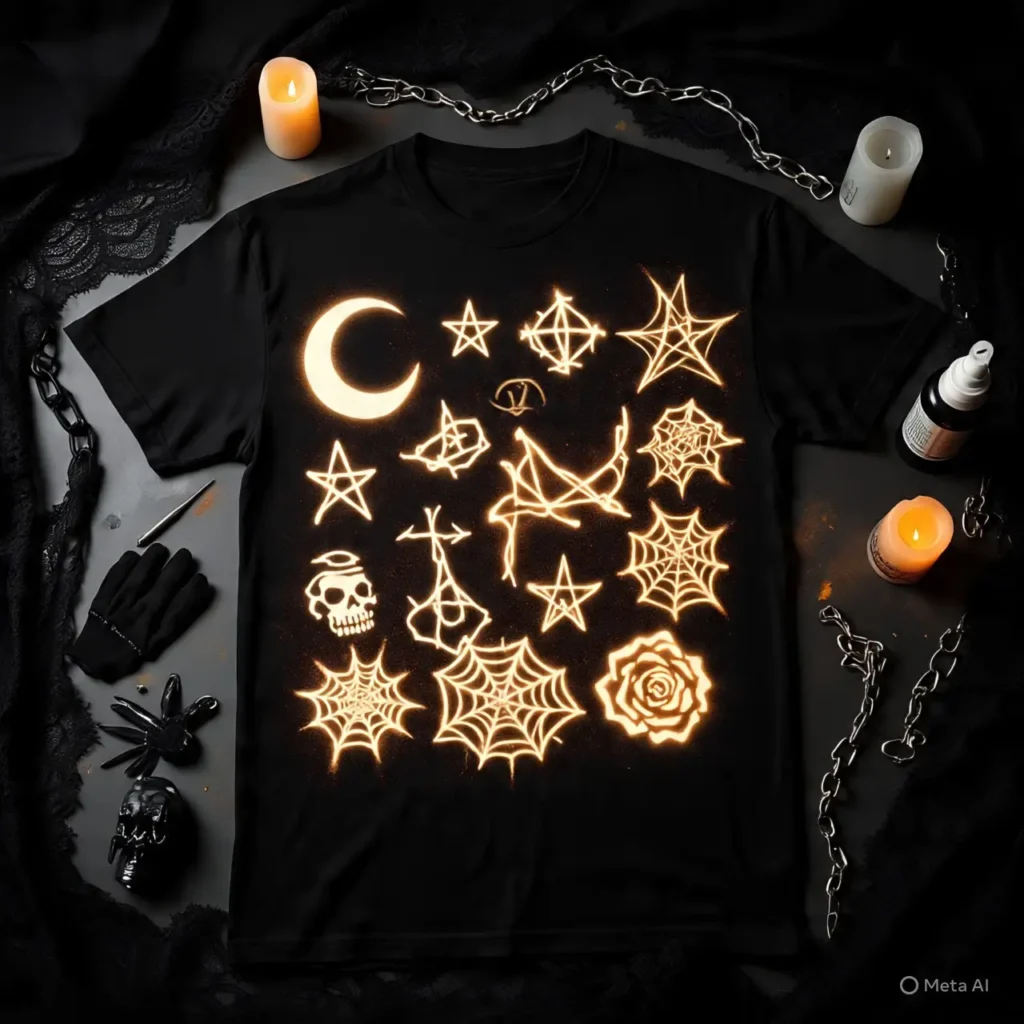
Bleach turns a flat black shirt into something genuinely one of a kind. It works especially well on band tees and pieces you don’t mind experimenting on, because the first few attempts will teach you more than any written guide.
- Occult symbols: pentagrams, crosses, crescent moons
- Gothic motifs: skulls, roses, spiderwebs
- Abstract splatter for a grungier, less controlled look
Use a stencil and apply bleach in light, controlled passes. Bleach keeps working after it hits fabric, so check your progress every few minutes. Over-processing is the most common failure here. Once the fabric goes past the color you wanted, you can’t undo it.
Adding Lace and Mesh Details
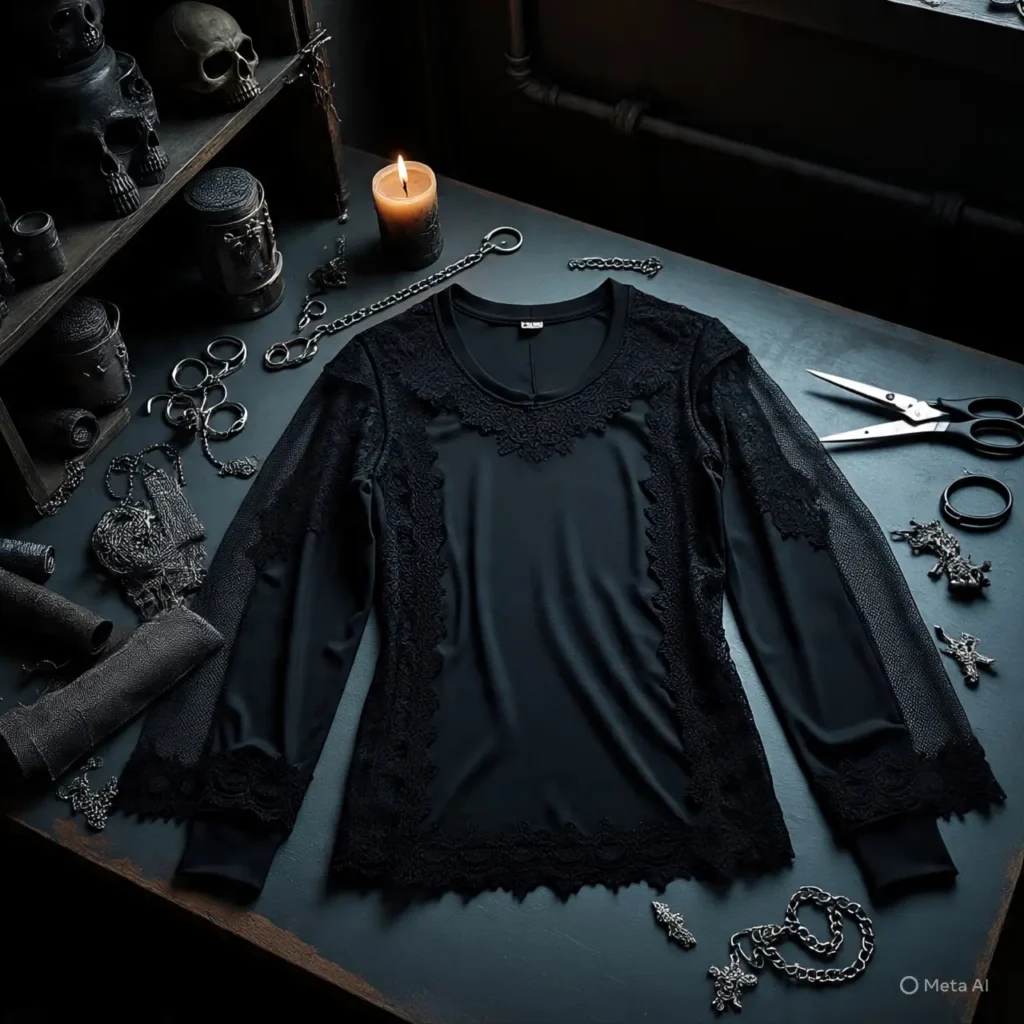
Sewing black lace along a sleeve, neckline, or hem turns a plain shirt into something with real romantic goth presence. Mesh panels add a harder edge when paired with metal hardware.
If you want a full guide to selecting and caring for lace, the black lace gloves guide on GothicMood goes deep on lace types and how to keep them looking intact wash after wash.
Bottoms and Denim
Custom Denim with Gothic Art
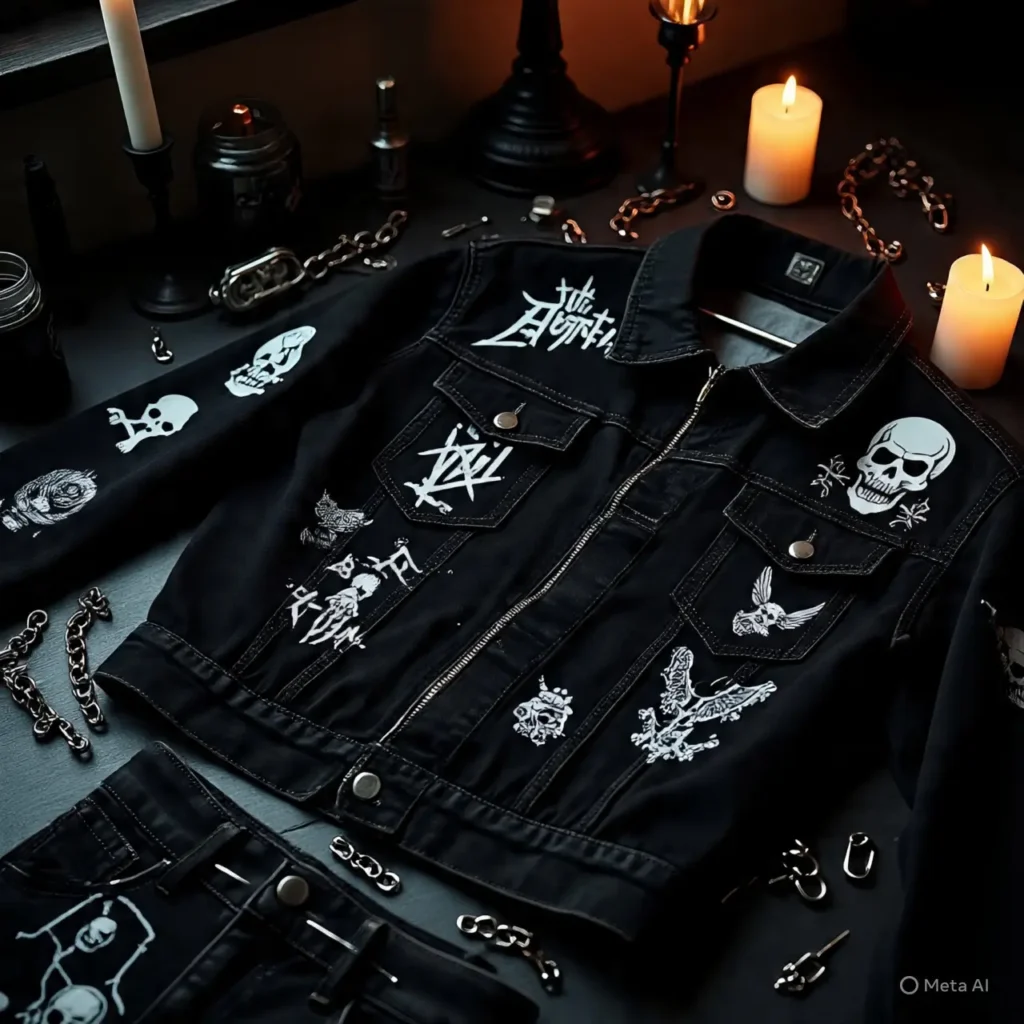
Fabric markers let you draw directly onto jeans, jackets, or vests without touching a needle. Sketch your design lightly in chalk or pencil first if you’re not confident freehanding. The marker won’t erase.
- Band logos and metalhead symbols
- Moon phases and celestial patterns
- Dark botanical work: thorny roses, bare branches, dead ivy
- Lettering, if you want a specific phrase worked in
Go over your lines twice once the first pass dries. Fabric marker fades faster than paint, and a second coat on the darkest areas makes the design last longer through washing.
Distressed Jeans with Chain Details
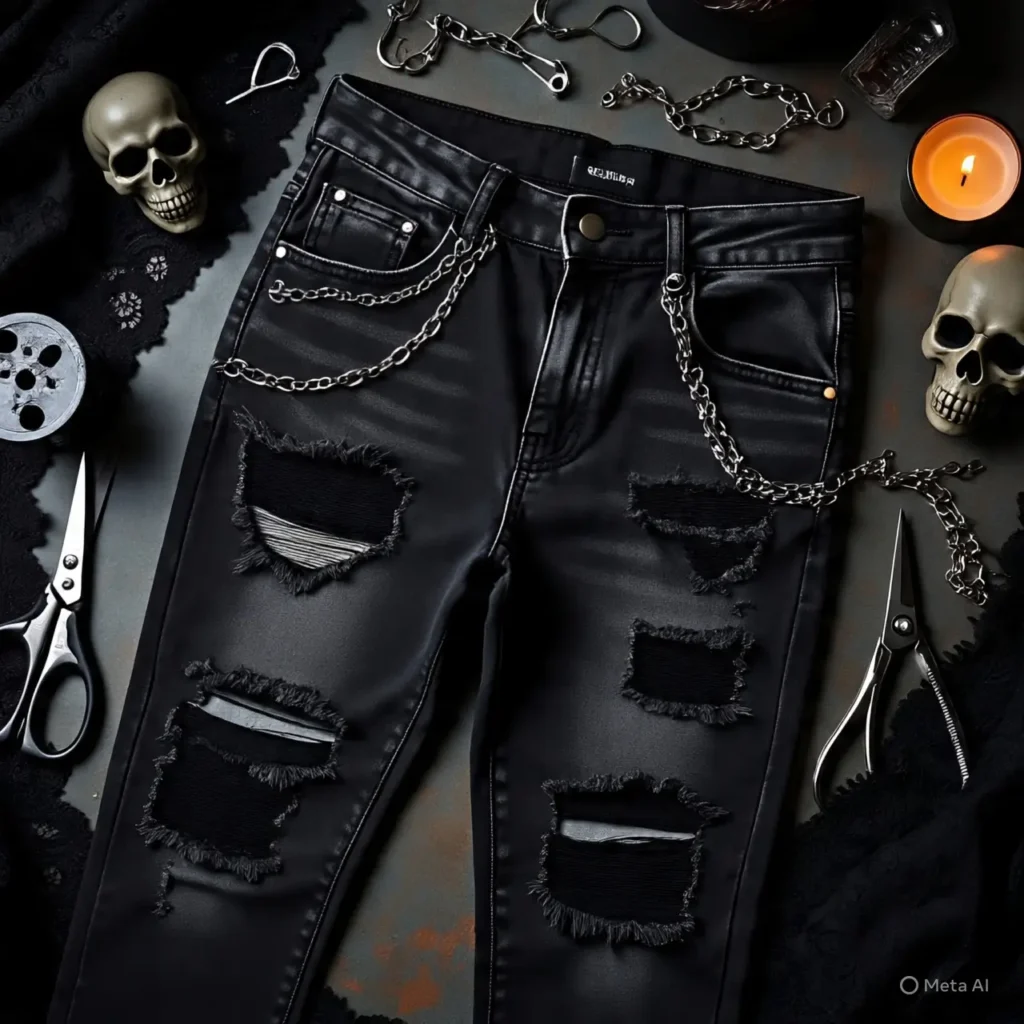
Rips plus hanging chains is about as punk goth as denim gets. Add studs around the pockets, cluster a few safety pins for texture, and tuck lace behind the most distressed areas.
You get a flash of pattern through the tears rather than bare lining. The combination of destruction and delicacy is what makes this work for gothic styling specifically.
Leggings
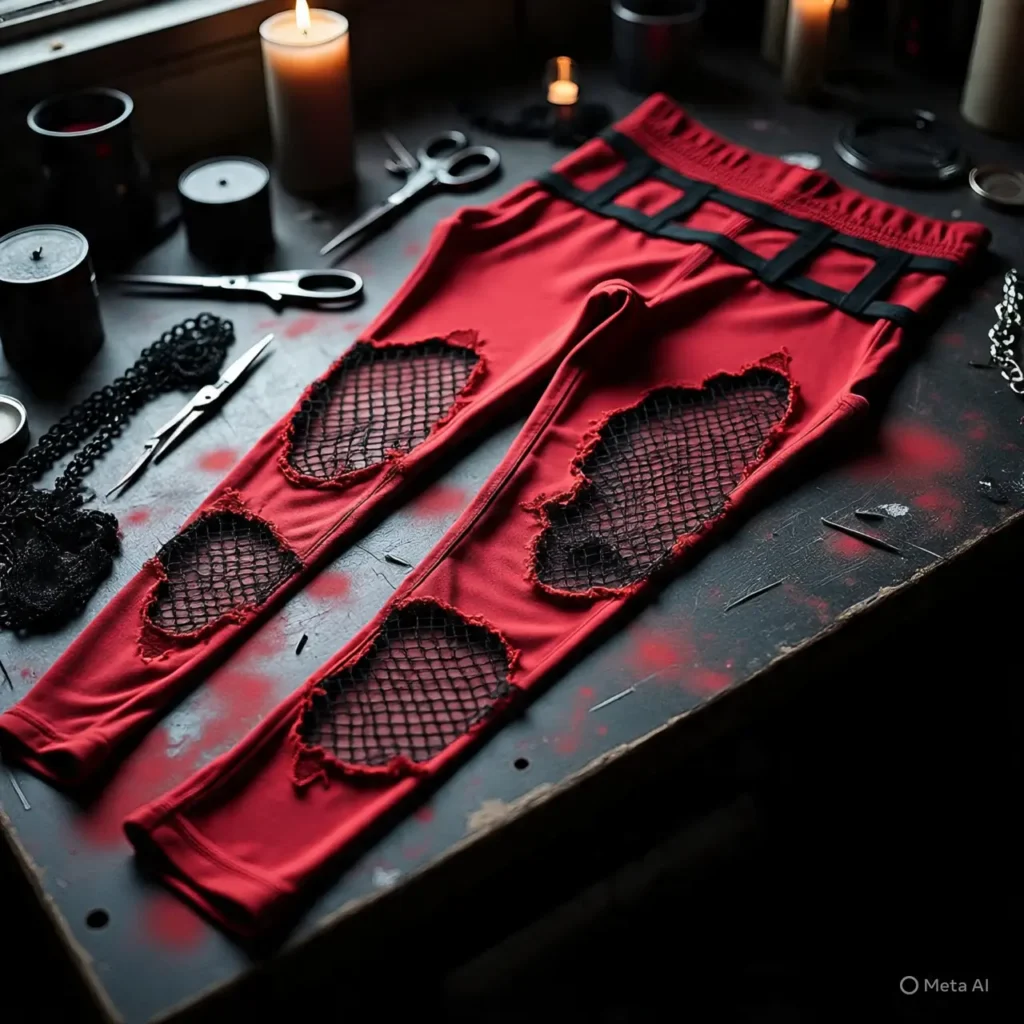
Leggings are one of the most forgiving bases on this list because the fabric stretches and absorbs small mistakes. Bleach patterns, sewn-on straps, or a fishnet overlay all hold up well.
The results work for both festival wear and everyday gothic streetwear, and the technique is the same regardless of whether your leggings are red or black.
Outerwear and Jackets
Band Patch Placements
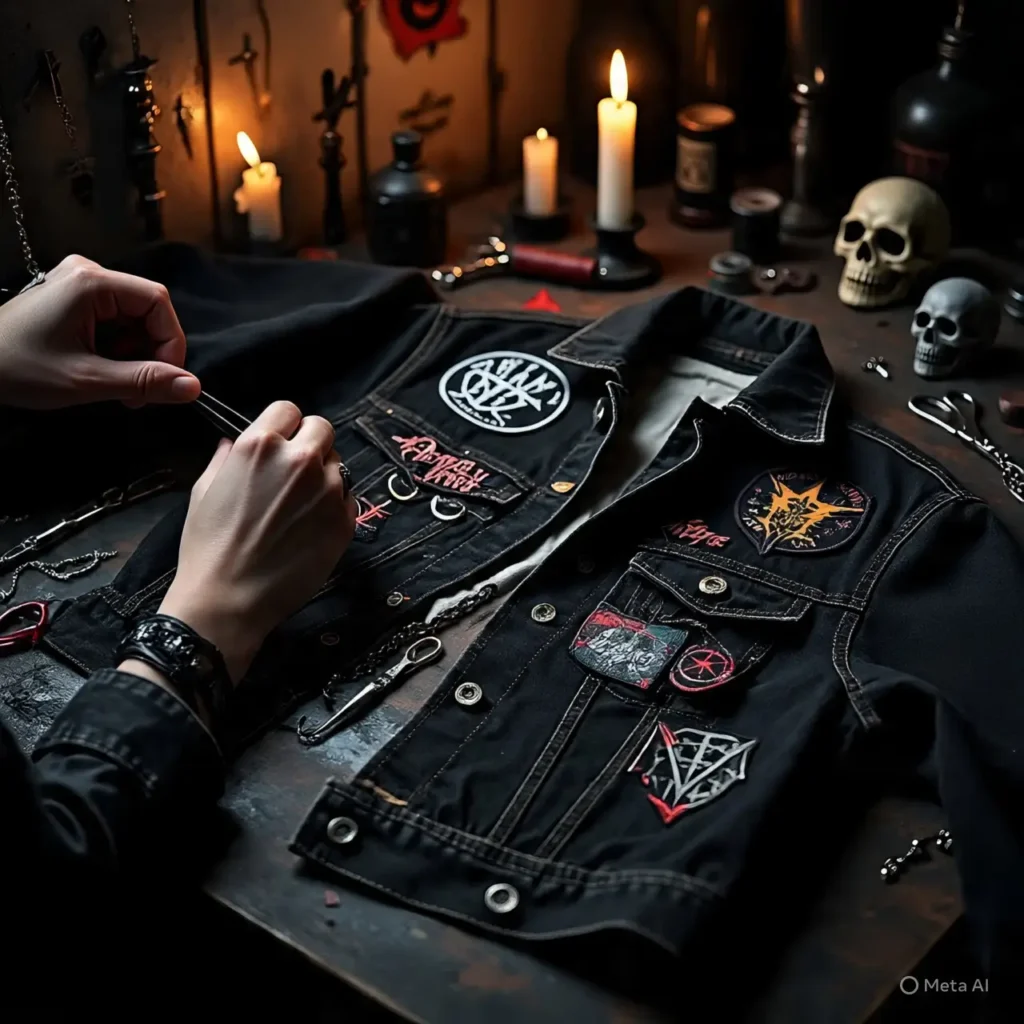
Where you put a patch matters as much as which patch you choose. Placement affects whether the result reads as deliberate or accidental.
- Back panel: one large centerpiece patch for maximum impact
- Shoulders: smaller accent patches that frame the back design
- Chest: band logos or symbols that read from the front
- Sleeves: patches arranged vertically down the arm
Sew patches with black thread if you want them to survive years of wear. Iron-on patches are faster but peel at the corners after repeated washing.
They work fine for a jacket you’re not planning to keep long. For anything you care about, sew them.
Embroidery for Gothic Jackets
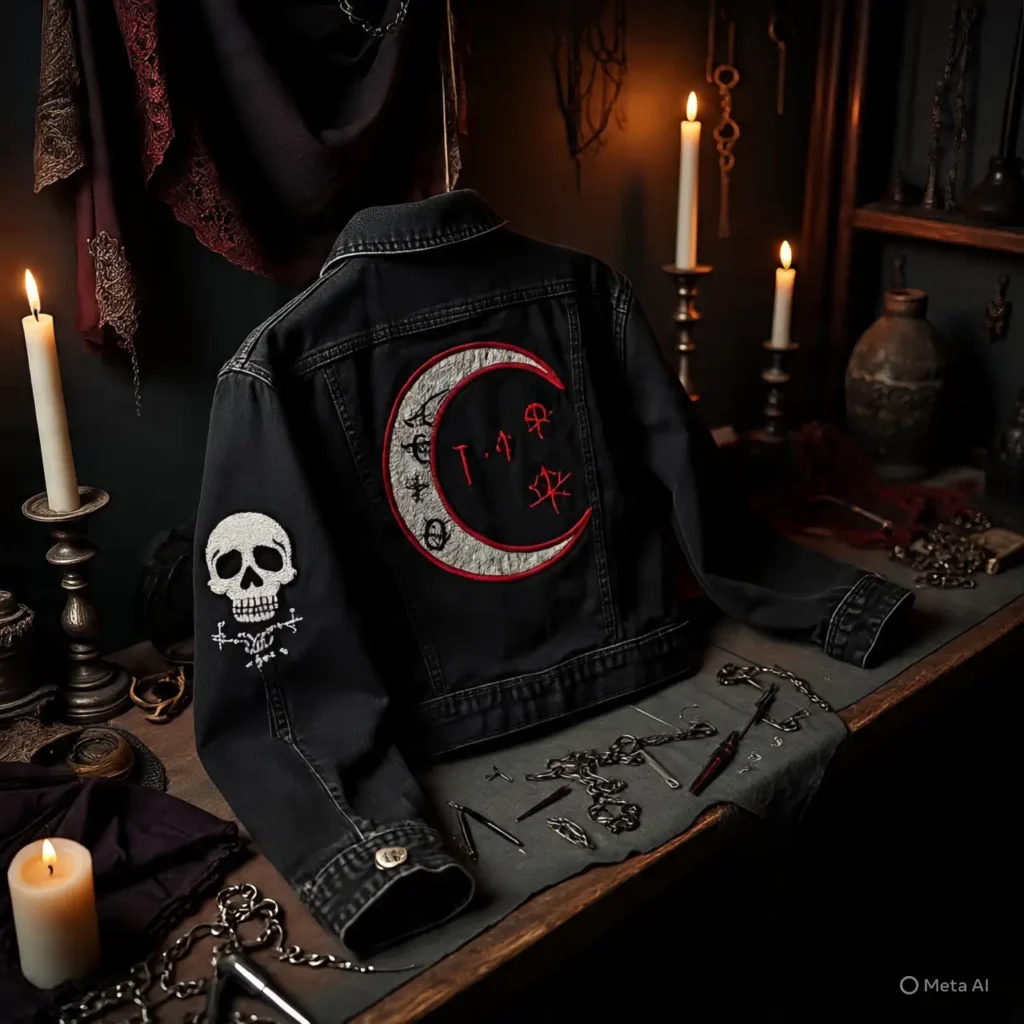
Embroidery takes longer than anything else on this list. It also looks the most deliberately handmade, which in gothic fashion is a genuine compliment. Skulls, crescent moons, and occult symbols stitched in black thread read as dark-romantic.
Red thread on the same symbols shifts the whole mood toward something more vampiric. Pick your palette based on the substyle you’re building toward.
Studs and Spikes
Metal studs and pyramid spikes turn an ordinary jacket into a battle jacket. They work on leather, denim, and canvas. Combine with chains and D-rings for the full industrial goth effect.
The process is simple: punch or press the prongs through the fabric, fold them down flat on the inside, and repeat. Space them evenly if you want a structured look. Cluster them randomly if you want something rawer.
Accessories and Jewelry
Chokers
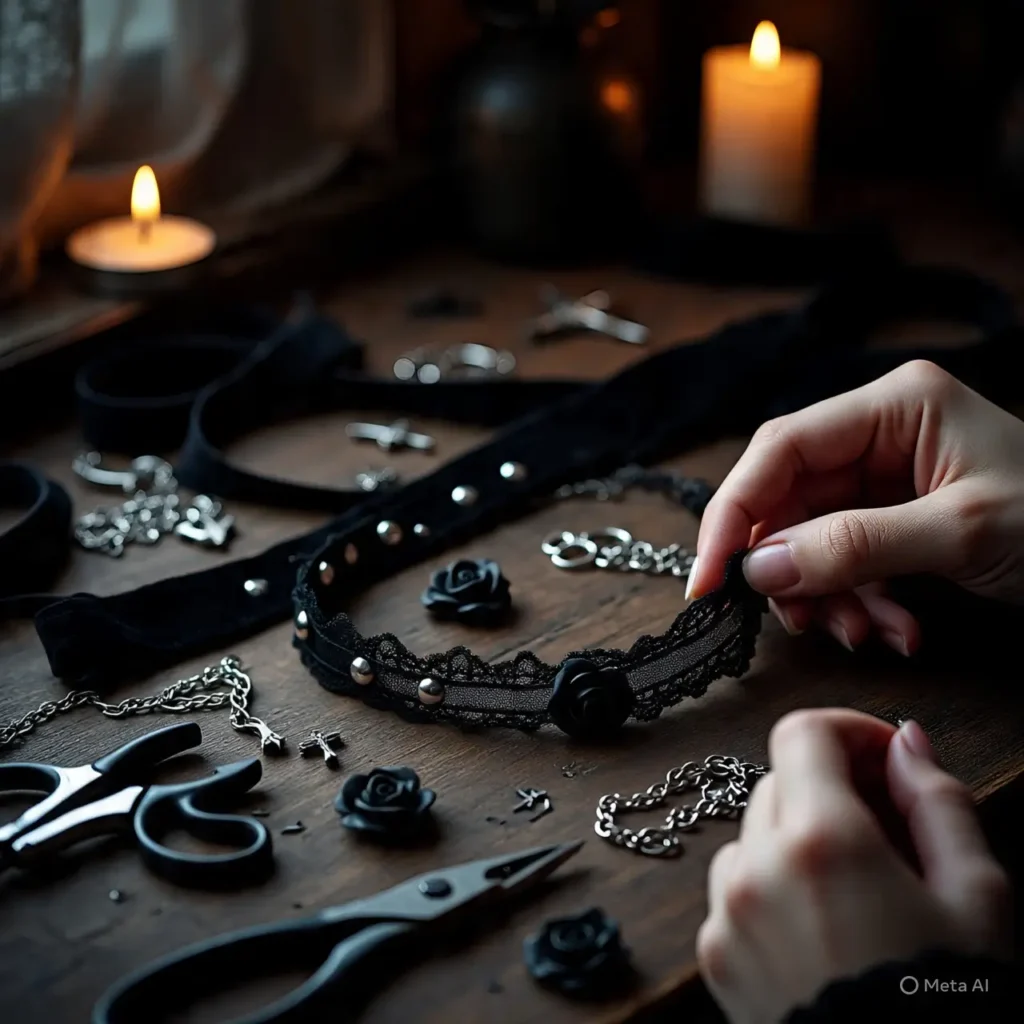
A choker is the fastest gothic accessory you can make from scratch. Cut your chosen material to fit your neck with a small overlap for closure. Add a charm, a stud, or a small skull pendant. Then, you clasp or tie it.
- Black velvet ribbon with a small charm: romantic goth
- Faux leather strap with pyramid studs: punk goth
- Lace trim: romantic or Victorian
- Chain links: cyber goth
Most choker materials cost a few dollars per piece. You can finish one in fifteen minutes once you’ve assembled the materials. Make a few at once while you have everything laid out.
Earrings and Rings
Skull beads, cross charms, and gothic pendants turn basic jewelry findings into pieces with actual character.
Wire wrapping is worth learning if you want a more industrial, handmade look. It lets you set stones or charms without soldering and without spending much on tools.
Hair Accessories
A black rose crown, a lace veil, or a spiked headband each finishes a look differently. The rose crown and veil are romantic and Victorian. The spiked headband reads as punk.
Mini top hats and feathered clips pull toward steampunk or cabaret. Pick based on which direction your outfit is already heading, rather than adding whatever looks gothic in isolation.
Full Outfit Build: Plain Dress to Gothic Statement
Signature Gothic Makeup Looks

This project pulls multiple techniques together into one look. Start with any simple black dress. Plan the full build before you start cutting or gluing anything.
- Add lace sleeves using fabric glue or a few hand stitches along the shoulder seam.
- Run silver chains across the waist and neckline. Use small jump rings to connect chain sections so they lay flat rather than bunching.
- Make a matching velvet choker with one small charm that echoes an element of the dress design.
- Apply gothic makeup: a smoky eye is the easiest starting point.
- Finish with fishnet stockings and combat boots.
Plan for a couple of hours if this is your first time combining several techniques in a single outfit. Material costs depend entirely on what you already own versus what you need to buy.
Ignore any flat total you see quoted online. Your actual cost depends on your local stores and your current supply situation.
Seasonal Gothic DIY Projects

Halloween
Gothic Halloween builds can go well past a basic vampire cape. The DIY techniques above apply directly to costume work, and the results tend to look more considered than off-the-shelf options.
- Victorian mourning dress: thrifted black dress plus lace modifications
- Steampunk witch: brass-toned accessories, structured layers
- Gothic fairy: tattered wing overlays with dark body paint
- Dark angel: feather details and metallic paint on a black base
Festival and Warm Weather
Heavy gothic layering becomes genuinely uncomfortable once the temperature climbs. Mesh tops, sheer overlays, and cutout designs keep the aesthetic without overheating you.
These are also faster builds than full layered looks, which makes them worth having ready before a festival rather than scrambling the night before.
Budget-Friendly Gothic DIY Tips
Second-hand shops are the cheapest source of raw material for almost every project on this list.
For more depth on building a full gothic wardrobe from thrifted basics and smart DIY choices, the guide to making goth clothing cheap on GothicMood covers sourcing strategy, what to look for in each section of a thrift store, and how to identify pieces with real transformation potential.
- Any black clothing, regardless of condition, because condition is what you’re changing
- Vintage pieces with obvious gothic silhouette potential
- Leather jackets, specifically, for patch and stud projects
- Formal wear for Victorian Gothic modifications
Thrifted pieces typically cost a fraction of ready-made Gothic clothing retail prices. The exact difference varies by what’s in stock and where you’re shopping.
The savings are real, but a specific percentage isn’t worth quoting without a receipt attached to it.
Sourcing Materials
Craft stores run sales often enough that waiting is worth it. Buy basics at full price only if you need them immediately for a specific project.
Online retailers sell metal studs, gothic charms, and specialty fabric in bulk at better per-unit prices.
Fabric remnant bins are an underused source for lace accents and patch material, usually priced by the piece or by weight.
Frequently Asked Questions
What are the easiest gothic DIY projects for beginners?
Cutout shirts, chokers, and patch application. All three need minimal tools, produce a finished result the same day you start, and teach you techniques you’ll use in every more complex project after.
How much does it cost to create a gothic DIY wardrobe?
It varies too much to give a reliable number. How much you start from thrift versus buying new, your local craft store’s pricing, and what you already own in black all affect your real cost. The gap between a thrift-and-DIY approach and buying ready-made Gothic clothing is real and wide. A specific dollar figure would just be a guess.
Where can I find affordable Gothic DIY materials?
Craft stores for basics like fabric glue, scissors, and markers. Online retailers for metal studs, gothic charms, and specialty fabric in bulk. Dollar stores for safety pins, black ribbon, and simple markers. Fabric remnant bins for lace at well below per-yard pricing.
How long do these projects actually take?
Simple builds, a cutout shirt or a choker, run well under an hour once you’ve assembled your materials. Embroidery and full outfit builds spread across multiple sessions, especially the first time you’re learning a new stitch or technique. Your second attempt at any project will take less time than your first.
Final Thoughts
None of this requires advanced skills or expensive materials. A few safety pins, a bottle of bleach, and a willingness to experiment on a thrifted shirt will take you further than waiting until you can afford a finished wardrobe. Start with the cutout shirt. Do the bleach art on the next one. Build from there.
For more on building a gothic wardrobe without spending much, the men’s goth style guide on GothicMood covers fit and substyle choices that pair directly with the DIY pieces in this guide, including which techniques translate cleanest to men’s silhouettes.
If you’re interested in Black Lace Gloves, be sure to check out our 22 Elegant Black Lace Gloves for Women – Bridal, Opera & Prom Styles to explore more unique and dark options!.
You are a very intelligent individual!