


Lace gothic fashion never really went away. Pinterest just handed it a name and a number for 2026.
The platform’s Laced Up trend tracks lace bandanas up 150 percent and lace belts up 55 percent, part of a wider surge the platform describes as lace turning up on everything from bomber jackets to doilies.
The style has treated lace as a core material since the subculture started, right alongside velvet, leather, and fishnet.
What changes this year is scale. Lace is moving off the collar and cuff and onto pieces that used to be lace-free territory, which means more places to work it into an outfit without repeating the same Victorian blouse everyone already owns.
This guide covers where lace actually earns its place on a goth outfit, a short vocabulary for buying it without guessing, and outfit formulas built around five different goth subtypes.
Why This Lace Gothic Fashion Trend Already Belongs to Goth
Lace never left gothic fashion. It sits in the same material family as velvet and leather in nearly every breakdown of the subculture’s visual language.
It has carried that role since the post-punk scene that started goth in the first place. Pinterest is only measuring everyone else catching up.
That matters for a site already building around Vamp Romantic, the other named 2026 trend Pinterest ties directly to gothic beauty.
The two trends share an audience and a mood: glossy dark glamour on one side, textured romantic detail on the other, and lace is one of the few materials that shows up naturally in both.
The practical upside is that you likely already own a starting point. A lace-trimmed slip, a pair of fishnet gloves, an old doily repurposed as a collar.
This trend rewards what is already in a goth closet more than it demands a new one.
Where Lace Actually Works On a Goth Outfit
Collars
A lace collar is the fastest way to move a plain black top toward Victorian without changing the rest of the outfit.
Detachable collars do the most work here, since one collar layers over a t-shirt, a turtleneck, or a corset top.
Peter Pan shapes read softer and closer to soft goth. Stand-up ruff collars read sharper and closer to trad or Victorian goth.
Pin a small brooch at the center front, and the collar reads as a considered accessory instead of a costume piece.
Gloves
Fingerless lace gloves are the single most efficient piece on this list, because they finish an outfit without adding bulk or heat.
Wrist length works for daytime and layers under a coat sleeve.
Opera length, past the elbow, is an evening piece and pairs naturally with a sleeveless corset top or a fitted dress.
Keep the rest of the hand simple when the gloves are doing the talking.
A statement ring on top of lace gloves usually fights the lace instead of complementing it.
Hemlines and Trim
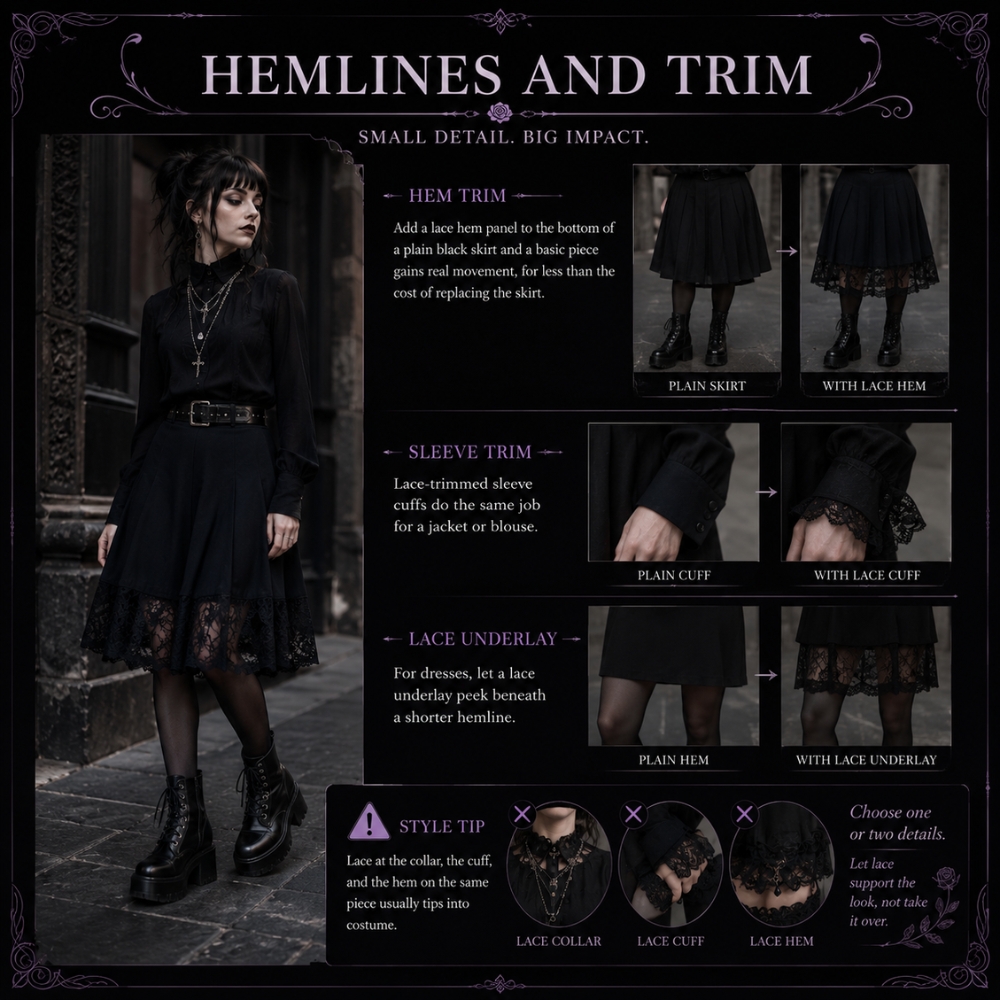
This is where the trend has the most room to grow.
Add a lace hem panel to the bottom of a plain black skirt and a basic piece gains real movement, for less than the cost of replacing the skirt.
Lace-trimmed sleeve cuffs do the same job for a jacket or blouse. For dresses, let a lace underlay peek beneath a shorter hemline.
It reads as intentional layering rather than an unfinished edge. Keep the trim to one strong location per garment.
Lace at the collar, the cuff, and the hem on the same piece usually tips into costume.
A Fast Lace Vocabulary
Not all lace behaves the same way, and knowing the type before you buy saves a return.
| Type | How it looks | Best use on a goth outfit | Care note |
| Guipure | Heavy, no net background, bold cutout motifs | Statement collars, structured trim on stiff fabrics | Sturdy. Hand wash and reshape while damp |
| Chantilly | Fine net ground, floral pattern, scalloped edge | Gloves, veiling, sheer overlays on dresses | Delicate. Snags on jewelry and rough zippers |
| Corded or Venise | Raised cord outlines motifs, slight 3D texture | Hemlines, appliqued accents on skirts and sleeves | Durable but the raised cord catches on rings |
| Stretch lace | Lace pattern knit into a stretch base | Bodysuits, fitted sleeves, layering pieces | Most practical. Often machine washable on gentle |
For a first purchase, stretch lace or corded lace give the most durability for the price.
Chantilly looks the most romantic and survives the least handling, so save it for pieces that stay mostly still, like a collar or a veil, rather than gloves that get pulled on and off all day.
Outfit Formulas By Goth Subtype
Lace gothic fashion reads differently depending on which corner of goth subculture you are dressing for.
These five formulas use the same fabric with a different placement, silhouette, and accessory logic for each.
Trad Goth

Base: black band tee or fitted black top, black jeans or a straight skirt, leather jacket.
Lace placement: a stand-up ruff collar or a strip of lace trim along the cuff of the leather jacket.
Finish: fishnets, combat boots, silver jewelry stacked rather than delicate. The lace should read as one sharp detail against otherwise hard materials, not as softness.
Romantic and Victorian Goth

Base: a fitted corset top or blouse with structured sleeves, a long black skirt.
Lace placement: opera-length gloves plus a lace underlay beneath the skirt hem, visible by an inch or two.
Finish: a cameo or filigree brooch at the collar, a parasol or long coat for outerwear. This is the formula lace was built for, so more than one placement works here, unlike the other subtypes.
For a deeper dive into building this silhouette from scratch, our affordable gothic style guide covers corset tops and lace layering on a budget.
Soft Goth

Base: an oversized sweater or a soft velvet dress, muted black.
Lace placement: wrist-length lace gloves and a small lace collar, both understated rather than statement pieces.
Finish: pearls, layered delicate jewelry, softer boots like Mary Janes instead of combat styles. The goal is texture, not drama, so keep the lace fine rather than heavy guipure.
Our full breakdown of this aesthetic, how to style soft goth outfits, already treats lace gloves as a core piece and pairs well with this formula.
Casual and Everyday Goth
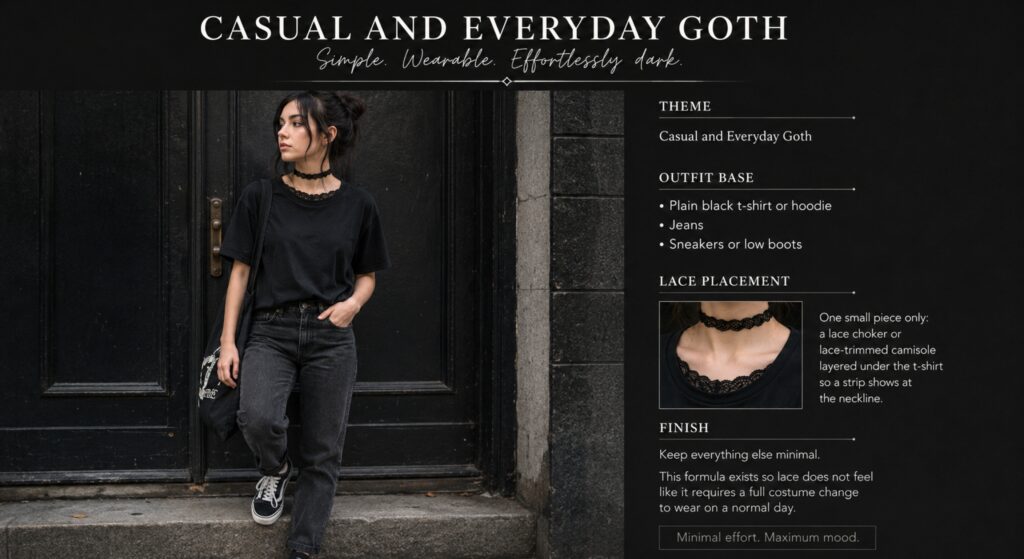
Base: a plain black t-shirt or hoodie, jeans, sneakers or low boots.
Lace placement: one small piece only, a lace choker or a lace-trimmed camisole layered under the t-shirt so a strip shows at the neckline.
Finish: keep everything else minimal. This formula exists so lace does not feel like it requires a full costume change to wear on a normal day.
Our everyday alt aesthetic outfits guide runs through more combinations built around this same low-effort logic.
Cyber Goth

Base: mesh top or PVC piece, platform boots, neon or black base layers.
Lace placement: stretch lace sleeves or fingerless lace gloves in black layered under fishnet arm warmers, treating lace as one texture in a stack rather than the focal point.
Finish: UV-reactive accessories, goggles, chunky jewelry. Lace softens a look that otherwise reads entirely synthetic, and the contrast between delicate lace and hard plastic textures is the whole appeal here.
Building a look for a partner or dressing this formula on a masculine frame? Our men’s goth style guide covers layering lace, leather, and mesh together without it reading costume.
Buying and Caring for Your Lace Gothic Fashion
- Check the fiber content before the pattern. Nylon and polyester lace hold shape and survive machine washing on a gentle cycle inside a mesh bag. Cotton lace is softer but shrinks and needs a hand wash.
- Test a small section for snagging before wearing lace gloves with rings on. Sharp jewelry edges are the most common way lace gloves tear.
- Skip the dryer entirely. Heat sets wrinkles into lace permanently and can melt synthetic fibers. Lay flat to dry on a towel.
- Store lace pieces flat or loosely folded rather than on a hanger, since the weight of the fabric stretches delicate patterns over time.
- If a lace collar or trim starts fraying at a cut edge, a small dab of clear fabric glue or a few hand stitches stops it before the damage spreads.
Product List
Categories only, since lace styles and stock change often. Buy from a listing with fiber content in the description so you know whether it is machine washable.
Detachable Lace Collar
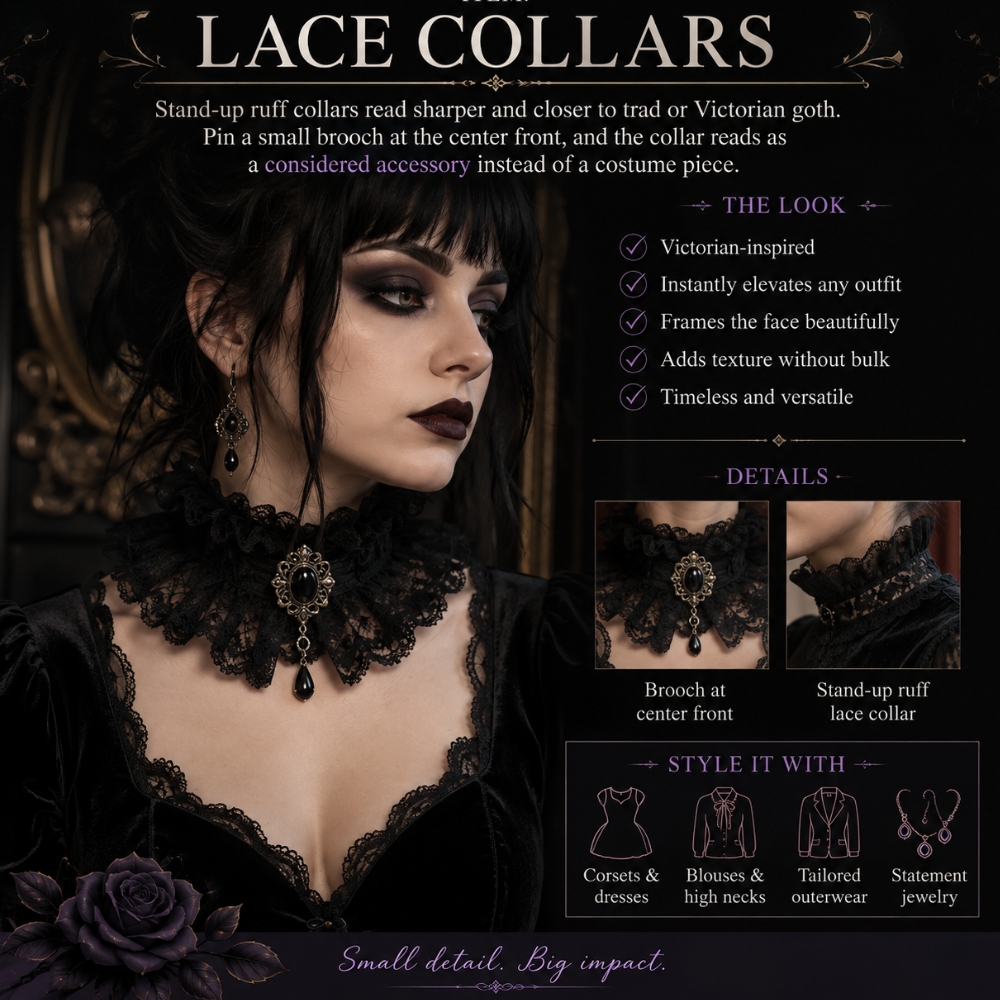
Look for a hook or button closure rather than sew-in, so it moves between outfits.
Fingerless Lace Gloves
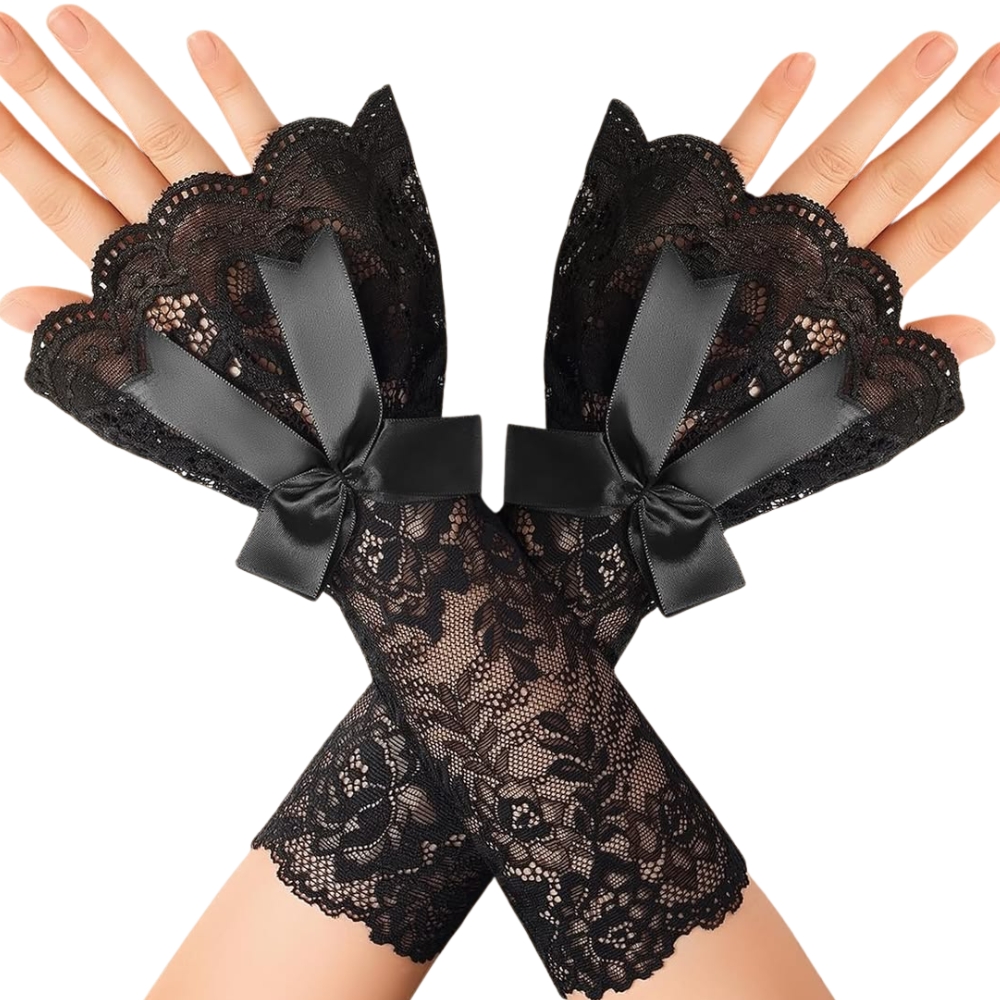
The most versatile single piece on this list. Buy black first.
Opera-Length Lace Gloves
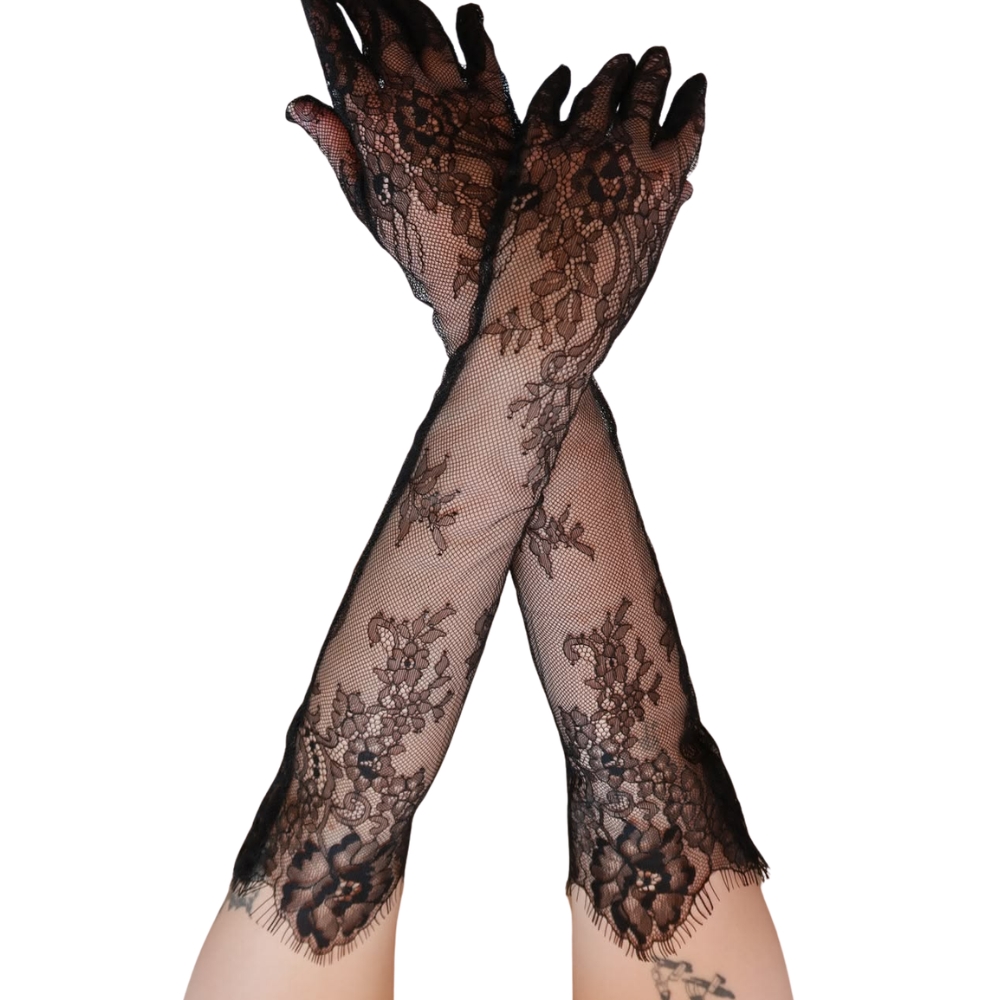
For the romantic and Victorian formula specifically.
Lace Hem Trim or Ribbon
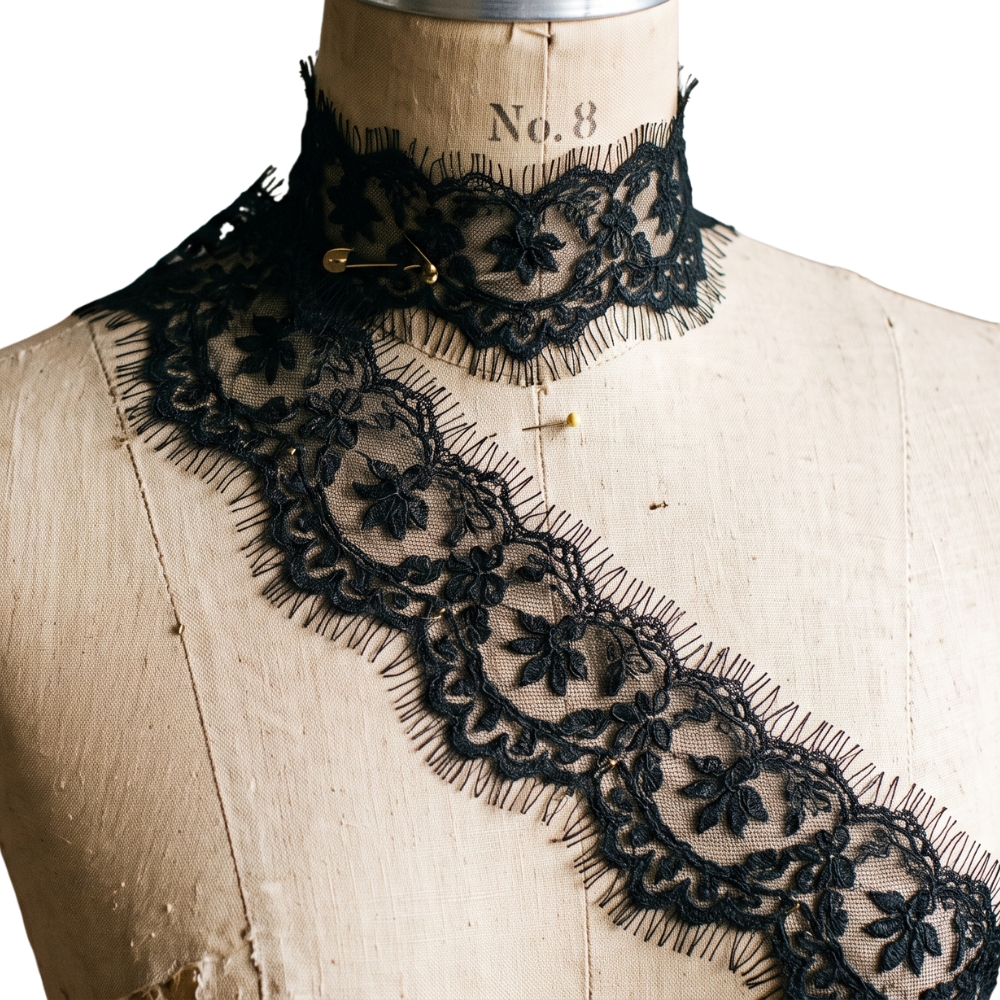
For adding a hem panel to an existing skirt or dress rather than buying new.
Stretch lace bodysuit or long sleeve top
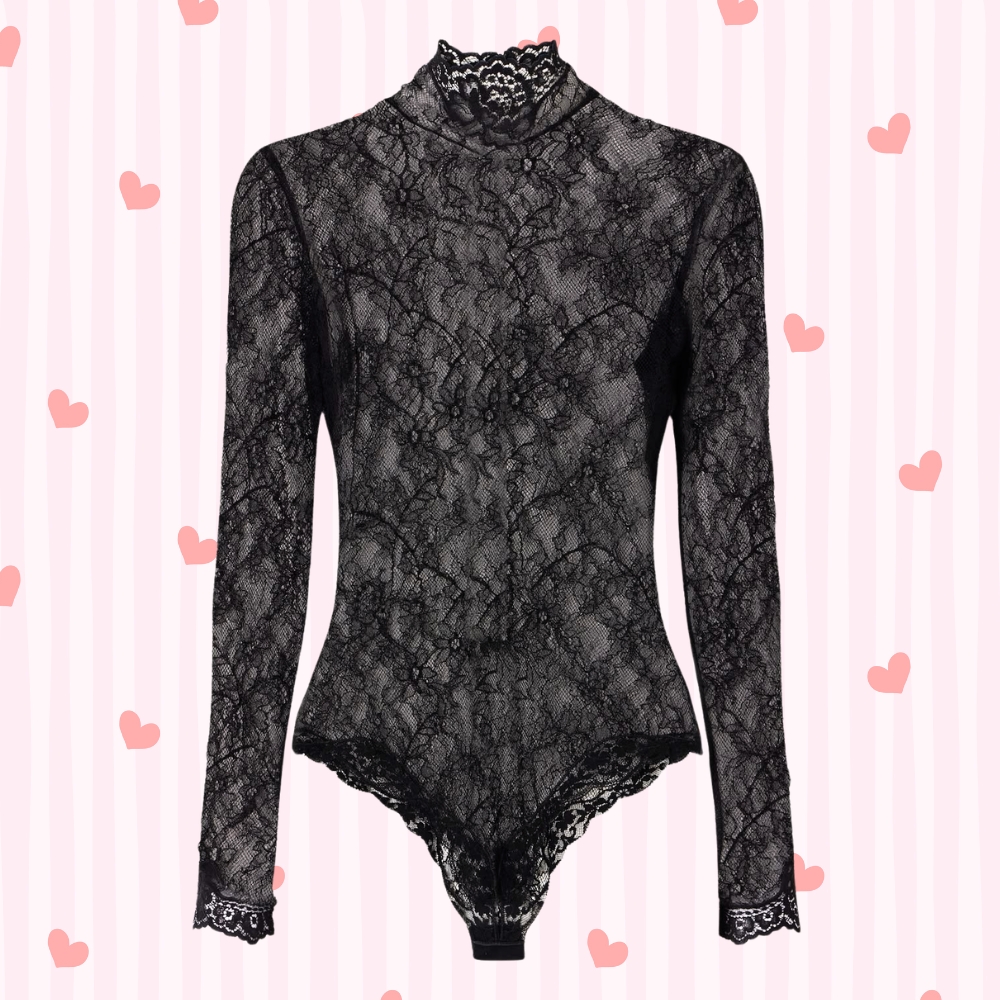
The layering piece for the cyber goth and casual formulas.
Lace choker
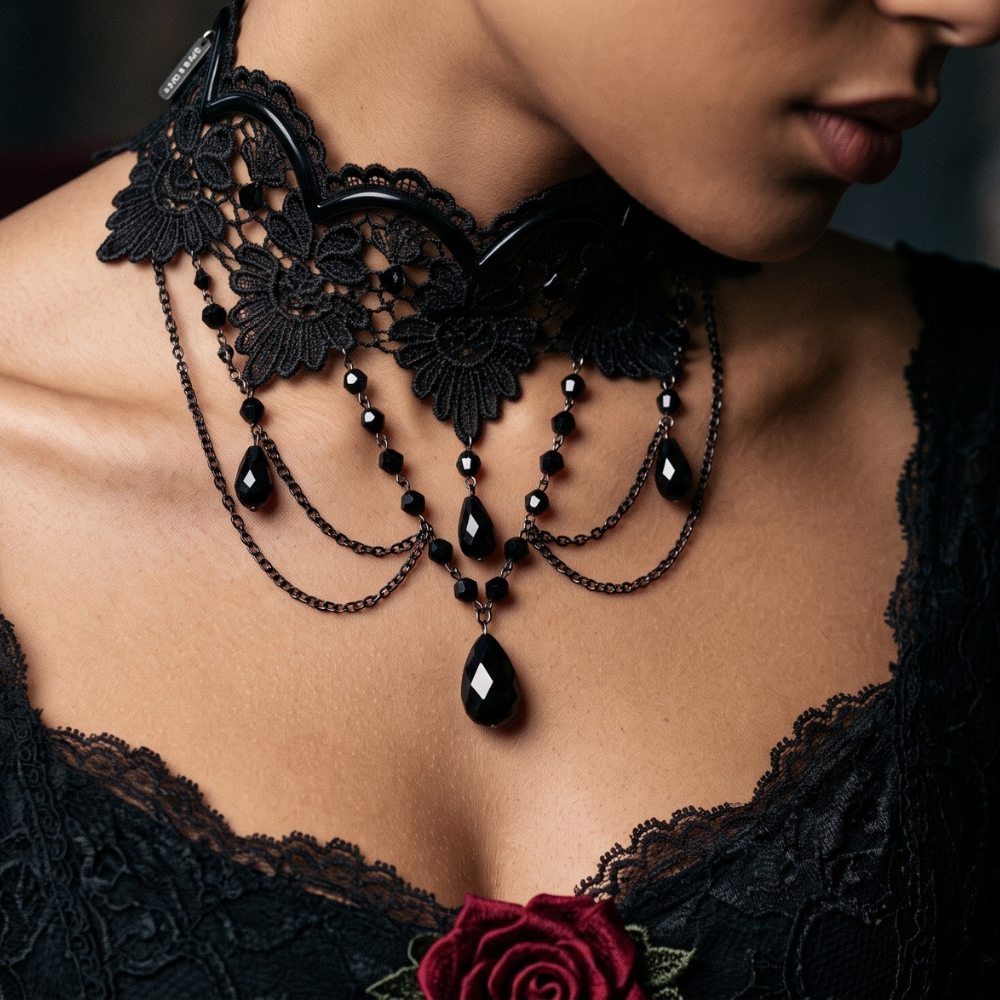
Low commitment, high payoff for the casual formula.
FAQ
Is lace too soft or feminine for a harder goth look?
No, placement decides that. A stand-up ruff collar against a leather jacket or a lace panel stacked under fishnet arm warmers reads sharp, not soft. Guipure and corded lace hold their structure better than delicate Chantilly does, so reach for those if a harder edge is the goal.
What is the easiest lace piece to start with?
Wrist-length fingerless gloves. They work with almost every goth subtype, layer over an existing outfit without alteration, and cost less than a collar or trim project.
Can I add lace to clothes I already own?
Yes. Sew or fabric-glue lace hem trim by the yard onto an existing skirt, sleeve, or collar edge. It is the cheapest way to try the trend before buying a piece built around lace from the start.
Does lace work for men’s gothic fashion?
Yes, particularly in Victorian and romantic gothic fashion for men, where lace cuffs, jabots, and gloves have long been part of the wardrobe. Placement matters more than gender here. A lace cuff under a coat sleeve reads the same on anyone wearing it.
How much lace is too much on one outfit?
One strong placement per garment, generally. Lace at the collar and the cuff and the hem on a single piece usually tips a look from gothic into costume. Spread lace across a few pieces in an outfit instead of stacking it on one.
Is machine-washable lace lower quality than lace that needs hand washing?
Not necessarily. It usually comes down to fiber. Synthetic lace like nylon or polyester tends to survive a gentle machine cycle, while natural fiber lace like cotton needs hand washing regardless of how well it was made.
Affiliate Disclosure: This post contains affiliate links. As an Amazon Associate, we earn from qualifying purchases. Additional product links in this post may earn GothicMood a commission at no extra cost to you.